

























































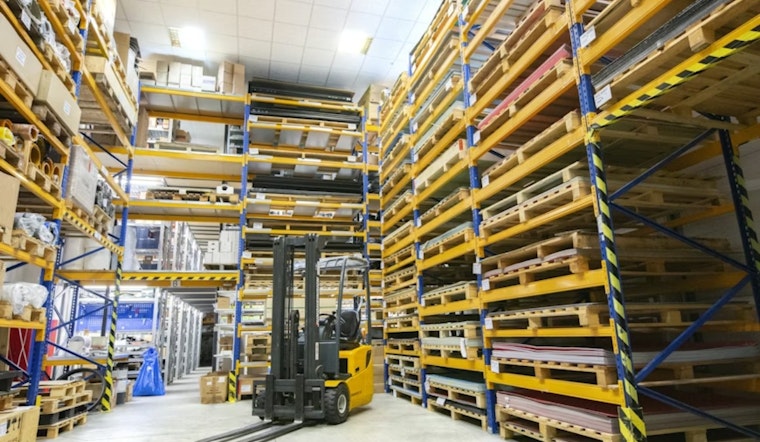
Denver’s industrial scene is riding a serious warehouse wave, with the construction pipeline swelling to roughly 8.3 million square feet. That bump is enough to put the metro among the West’s most active development markets, even as national industrial building cools from its recent frenzy and starts to level off. Most of the local action is clustered around the airport and northeast corridors, where big-box and build-to-suit projects still dominate new starts. On the surface, it looks like Denver is booming across the board, but the story gets a lot more nuanced once you look at who is counting what.
According to CommercialCafe, the national industrial construction pipeline recently totaled about 379.4 million square feet, and Denver’s under-construction inventory came in at roughly 8.28 million square feet, which was enough to rank the metro third in the Western U.S. The same report pegged national in-place rents near $8.99 per square foot and the vacancy rate at 9.2% in February, with leases signed over the prior 12 months averaging $9.97 per square foot. Those national benchmarks help explain why some developers kept pouring concrete even as demand cooled in certain parts of the country.
Local brokerage data, however, draws a tighter frame around the Denver story. CBRE’s Denver market outlook cited roughly 3.3 million square feet under construction at year-end 2025, while Colliers’ Q4 2025 brief tallied about 3.04 million square feet and noted that the Northeast/Airport submarket accounts for a large share of active projects. Those broker reports also stress that near-term activity leans heavily on build-to-suit and infill speculative work rather than the multi-million-square-foot logistics parks that grab headlines in bigger distribution hubs.
Part of the disconnect comes down to how each group keeps score. Industry trackers and brokerage shops do not always agree on metro boundaries, minimum project sizes or which industrial product types qualify, and those choices can move the totals around in a big way. For instance, CommercialSearch notes that some rankings include only projects larger than 25,000 square feet, a cutoff that wipes out a lot of infill and flex developments and reshapes the leaderboards. The result is that Denver can look like a Western heavyweight in one dataset and more modest in another, all depending on what gets counted.
What It Means For Leases And Sales
Even with the dueling data sets, the fundamentals are tilting in Denver’s favor. Colliers reported that vacancy dipped to about 7.7% in Q4 2025 while average asking rates hovered near $11.76 per square foot (NNN). That gap between asking and in-place rents, along with the "flight to quality" dynamic highlighted by CBRE, suggests that newer, well-located Class A buildings should lease more quickly and command stronger pricing than older product. For tenants and investors, the practical move is to drill into specific submarkets, building types and delivery timelines rather than leaning on a single headline ranking.
Bottom Line
Multiple national datasets and local brokerage briefs point to a healthy level of industrial activity in metro Denver, even if the square-footage math does not line up perfectly. Mile High CRE recently summed up the CommercialCafe findings, and local broker reporting shows that the pipeline is more concentrated in specific submarkets than the regional rankings might suggest. For developers, occupiers and investors, the next year will largely be about which deliveries actually match tenant demand, and which datasets best capture the projects that really matter on the ground.




