

























































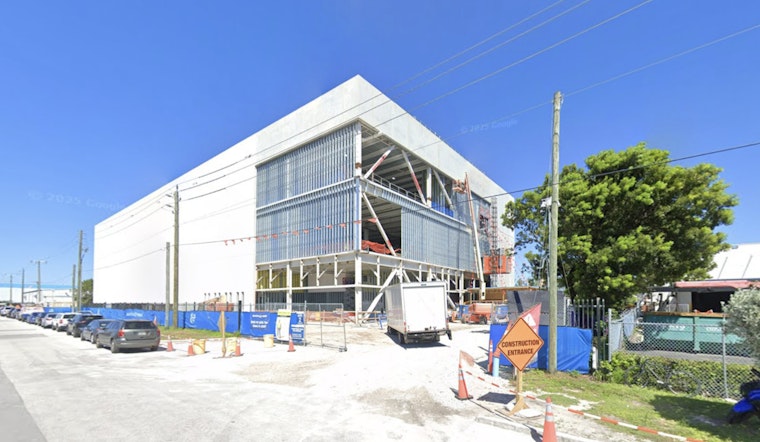
A 150,000-square-foot, AI-ready data center from Iron Mountain has slipped into Miami’s Westview neighborhood, and neighbors say it landed without the kind of public heads-up they expect for something that hums this much. At a recent town hall, residents pressed officials about water use, strain on the power grid and whether any of the promised jobs will realistically land with people who actually live nearby. For now, the windowless complex is remaking an industrial stretch of Westview and leaving locals asking who signed off and when.
What Iron Mountain Is Building
According to Iron Mountain, the facility, branded MIA-1, is planned at about 150,000 square feet and will phase up to 16 megawatts of IT load on roughly a 3.4-acre site, with a target rollout in mid-2026. The company is pitching the Miami spot as GPU-ready colocation space, powered with clean energy through its Green Power Pass program and built to pursue BREEAM accreditation. Those specs put MIA-1 in the mid-sized “edge” category rather than the giant hyperscale campuses that usually grab national headlines.
Neighbors Say It Was Quietly Built
Residents told Miami Herald reporters they only found out the project was a data center after construction was already underway, then showed up at a town hall with County Commissioner Marleine Bastien looking for answers. “I don't think they're aware of the long-term effect it will have on the community,” one neighbor said at the meeting, according to the Herald. Several people at the same meeting said they were still waiting for county offices to spell out both the environmental footprint and the real economic upside.
How The Project Took Shape
Industry reporting indicates Iron Mountain plans to convert a former records-storage building instead of building a new structure from scratch, a strategy executives described on investor calls as “scrapping the original building” in order to reuse the land. Data Center Dynamics reported on that earnings call and related filings outlining the conversion plan, which has technically been in public view since Iron Mountain first discussed the Miami site in 2023. The reuse approach lets the company bring capacity into the local market faster than a full greenfield campus would.
Promises And Skepticism
Economic-development officials have framed the build as another notch in Miami’s tech belt, and the county’s announcement leaned on sustainability language and local-investment talking points. The Miami-Dade Beacon Council’s release cast the facility as running on carbon-free energy, while reporting by the Miami Herald noted the project was described as roughly a 150 million dollar investment that would create about 30 jobs. Some Westview neighbors say those numbers do not match what the community actually needs. They point to the small number of day-to-day operating roles at most data centers and the pattern of higher-paying positions tied to such projects often being remote, highly specialized or both.
Environmental Concerns
National research has given residents plenty of reason to worry. A Cornell roadmap found that, if current trends hold, U.S. AI data-center buildouts could add 24 to 44 million metric tons of CO2 per year by 2030 and demand 731 to 1,125 million cubic meters of water annually. Those figures make siting decisions and energy sourcing core public-policy issues, not just technical details. The Cornell team also laid out ways to sharply cut those impacts through smarter siting, faster grid decarbonization and better operational efficiency, but noted that those fixes require time and concrete policy moves, according to Cornell. In Westview, that national backdrop is feeding anxiety about groundwater, future utility bills and the long-term tradeoffs that come with quietly adding a power-hungry facility to the block.
State Rules And Transparency
Florida lawmakers moved this session to put some guardrails around big power users. CS/CS/SB 484 requires public utilities to develop minimum tariffs for large-load customers, tightens consumptive-use rules for heavy water withdrawals and forbids government agencies from signing secrecy agreements that hide basic project details, according to the bill text. The law sets deadlines for tariff filings and creates new permitting rules meant to keep large customers from shifting costs onto everyday ratepayers, as outlined by the Florida Senate. Residents, though, say the transparency gap usually opens much earlier, during land deals and vendor contracts, when community input is hardest to secure.
For now, Westview neighbors say they plan to keep pressing for specifics: how exactly the MIA-1 facility will be powered, how much water it will draw and whether local hiring promises will translate into real paychecks in the neighborhood. The next concrete clues are likely to show up in utility tariff filings, consumptive-use permit applications and any public notices that emerge from county permitting offices as the project moves toward that mid-2026 timeline.





