

























































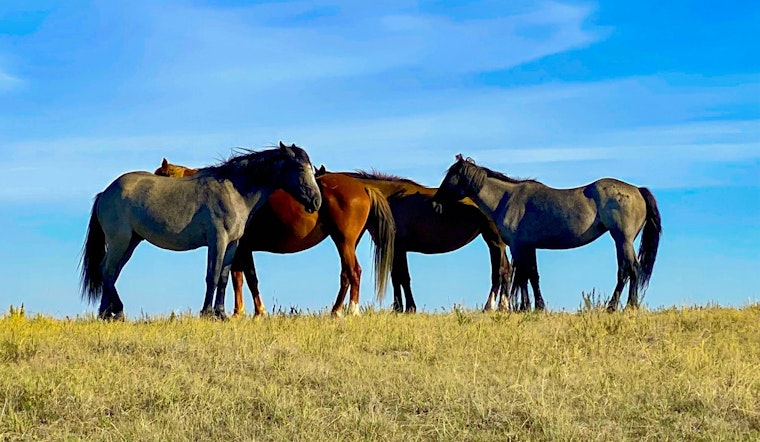
Wild horses on Shackleford Banks are dying at a rate that has park managers on edge, with a sharp jump in deaths that federal scientists say is tied to food scarcity on the remote island south of Beaufort.
The National Park Service's 2025 annual findings show the herd lost 20 horses last year, a mortality rate of 17 percent, nearly triple the long-term average. By the end of 2025, only 102 horses remained on the narrow barrier island, which visitors can reach only by boat or ferry.
According to a report by Cape Lookout National Seashore, the horses that died included several older mares and animals already in thin body condition. The report concludes that “the increased mortality is primarily due to the herd adjusting to the available vegetation on the dynamic barrier island.” It also notes that seven foals were born in 2025, one foal died and two were removed for intensive care.
Why The Park Points To A Food Shortage
Park biologists link the spike in deaths to a tangle of coastal changes that are reshaping the horses’ home turf. Shoreline erosion, grassy swales turning into woody shrubs, loss of marsh, repeated overwash and intermittent drought have all chipped away at reliable grazing areas, as reported by The Charlotte Observer.
Those habitat shifts have reduced forage and, according to the findings, made fresh drinking water “less widely available than is desirable,” leaving already stressed horses more vulnerable when nutrition runs short.
Management Steps And Legal Limits
The park has relied on immunocontraception since 2000 to keep numbers in check without constant roundups. The annual findings explain that the vaccine’s effects are additive yet reversible. One dose typically prevents pregnancy for about a year, and 11 mares were treated in 2025 to delay conception for two to three years, according to Cape Lookout National Seashore.
Federal law tells the park to allow a herd of at least 110 horses, with a preferred range of 120 to 130 animals. The report notes that the park is not required to boost numbers if declines are caused by natural forces such as habitat change or drought, and no roundups are on the calendar.
The Foundation for Shackleford Horses remains the park’s management partner, pitching in volunteer labor and funding for veterinary care and adoptions when horses are removed.
What Neighbors And Other Herds Say
Local groups are watching the situation closely and putting it in context with other wild herds along the coast. The Charlotte Observer reported that the Corolla Wild Horse Fund sees a key difference for Corolla's herd of about 100 animals, which is not facing the same level of starvation risk.
Those horses can swim into marshes and drink from tidal canals, a luxury Shackleford’s herd does not share to the same extent. Managers and volunteers say the two herds live in very different landscapes, and that gap shows up in survival rates.
What Visitors Should Know
Park staff and partner organizations are doubling down on a familiar message to visitors: do not feed, touch or crowd the horses. Outreach teams made thousands of visitor contacts in 2025 to get that point across and keep the animals as wild as possible, according to coverage of the Pony Patrol program.
Coastal Review reported that volunteers spent the season patrolling the islands, encouraging people to keep their distance and helping to cut down on risky human-horse encounters. Giving the animals space helps them conserve energy for foraging and lowers the odds they will ingest harmful food or debris.
Park staff say they will continue monitoring the herd year-round while partners scale up outreach and care efforts. The state's Division of Coastal Management and park partners are again recruiting Pony Patrol volunteers for 2026 to strengthen education and protection work, as announced by the NC Department of Environmental Quality.



