

























































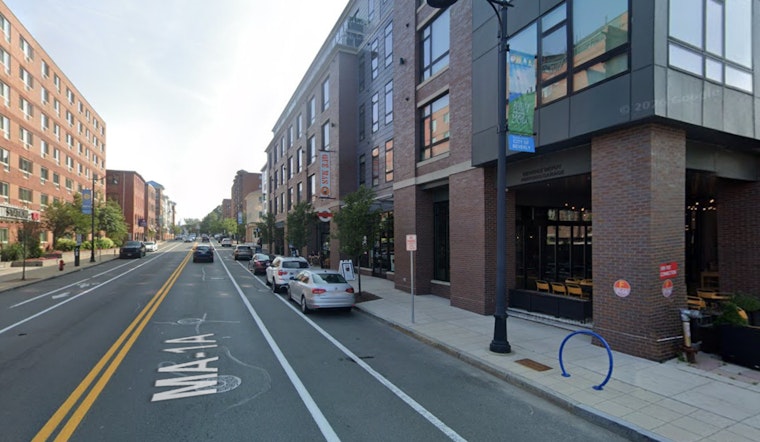
Construction crews are officially at work on Phase II of Holmes Beverly, as Barnat Development moves ahead with a mixed-income expansion steps from the Beverly Depot commuter rail station. The new phase will add 52 apartments to the existing complex, bringing Holmes Beverly to roughly 119 homes in total, with one in five units set aside for workforce households.
What’s planned
According to ConnectCRE, Phase II will deliver a mix of studio, one- and two-bedroom residences, along with underground parking built next to the current building. The expansion is backed by the newly launched Holmes Opportunity Zone Fund, which is pairing roughly $10 million in fund equity with about $21 million in long-term HUD-insured debt arranged through Berkadia Commercial Mortgage. Once the new building opens, Holmes Beverly is expected to total 119 units, with 20 percent reserved as workforce housing.
Backstory
Holmes Beverly started out as a 67-unit, transit-oriented rental building completed in 2018 and developed by Barnat Development, with a share of apartments reserved as workforce units supported by local housing programs. MassHousing materials and project documents note that the first phase was built next to the MBTA garage and offered studio through two-bedroom layouts along with ground-floor retail space. The Phase II announcement effectively continues Barnat’s pattern of small-scale, transit-adjacent infill projects across the North Shore.
Developer's pitch and the funding angle
Sarah Barnat has framed Phase II as “the future of resilient, transit-oriented housing on the North Shore” and said the Holmes OZ Fund is designed to help make more projects of this type feasible, per ConnectCRE. On its own site, Barnat Development features Holmes Beverly as one of its signature completed efforts, underscoring the firm’s focus on transit-oriented development.
Opportunity zone money and what it means locally
The strategy of pairing Opportunity Zone equity with HUD-insured debt fits into a broader national pattern of OZ capital flowing into multifamily housing, a trend researchers say has often leaned toward market-rate projects in metropolitan areas. The Urban Institute has urged policymakers to refine OZ tools so that private investment delivers lasting affordability and real community benefits. In Beverly, the presence of workforce units and the project’s location a short walk from transit are likely to be key tests of whether this particular deal pays off for local residents.
What to expect next
Construction on Phase II is underway, although neither Barnat nor its lenders have released a public completion date for the new building. The Barnat Development website highlights Holmes Beverly as a completed project and points to the firm’s experience with public-sector land deals and complex capital stacks, and local permitting notices are expected to give the clearest read on timing as the work progresses.
For Beverly, the expansion means more apartments within an easy walk of the depot and a modest increase in workforce-oriented housing. The real verdict will show up in future leasing notices and in how many homes actually rent at workforce price points, while city officials, transit riders and neighbors keep an eye on the site as the project moves through construction.





