

























































Months after Illinois lawmakers told public colleges to spell out what happens if federal immigration agents show up on campus, many students and advocates say those protections are still buried, half-finished or both. The result, they say, is a nagging question that has not gone away: if agents appear near a classroom or dorm, who do you actually call?
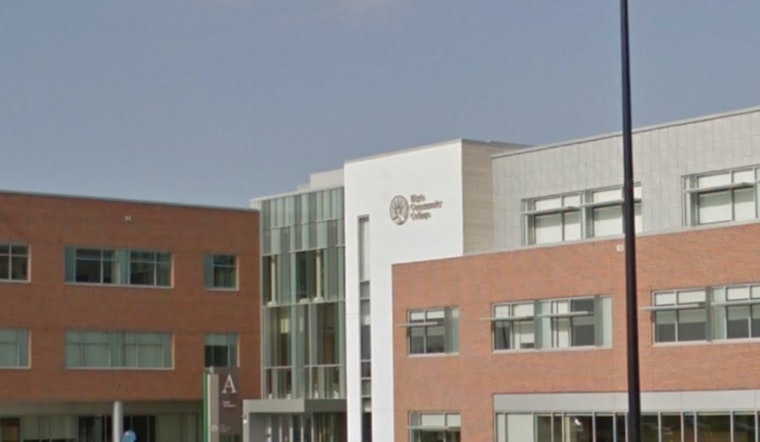
A review of campus websites and internal policies found sizable gaps in compliance roughly four months after the law took effect. Only a small group of public institutions checked every box on the list of requirements that reporters tracked. According to the Chicago Sun-Times, just the University of Illinois Urbana-Champaign, the University of Illinois Chicago, Illinois State University and Elgin Community College met all four items examined.
What HB1312 Requires
The law, House Bill 1312, passed in December 2025 and tells public colleges to do several specific things when it comes to immigration enforcement. Each school must name a person or office to receive reports about immigration agents, consult with legal counsel, document any interactions with federal agents, notify students and staff when agents are looking for them, and post a clear contact point on the school’s main website.
Colleges were expected to adopt and publish those procedures by Jan. 1, 2026. The law also directs the Illinois Community College Board and the Illinois Board of Higher Education to gather the procedures schools submit and deliver a report to the General Assembly by July 1, 2026. That timeline is laid out in the bill text from the Illinois General Assembly.
Gaps on Campus
The review turned up a pattern of partial compliance. Some colleges named campus safety or a security director as the point of contact but did not publish a dedicated phone number or web page for reporting the presence of immigration agents. Other schools had little or no written process for how to record agent interactions or how and when to notify students or staff who might be affected.
City Colleges of Chicago, for instance, identified a security director as the point person. According to the Chicago Sun-Times, that system does not list a specific contact on its public website for reporting immigration enforcement, and several other community colleges also fell short in the procedures they provided to reporters. The information exists in some cases, but it is hardly front-and-center for a student scrolling on a phone between classes.
Some Campuses Went Further
Other schools have gone beyond the bare minimum, at least on paper. Harper College publishes a dedicated immigration guidance page that tells students to call Harper Police at 847-925-6330 and explains how officers will verify warrants and protect student privacy. Harper College has also posted FAQs and resource links in multiple languages so students do not have to guess what their options are.
Elgin Community College has taken a similar approach. Its support page lists an alternative non-emergency campus police number, along with a contact in the Office of the General Counsel for immigration-related encounters. Those details are laid out on a public-facing page maintained by Elgin Community College.
Numbers and Student Reaction
The stakes are not small. A data tracker cited in the coverage estimates that more than 27,000 undocumented college students and more than 64,000 international students are enrolled statewide, which adds up to roughly one in ten students in Illinois. That means the question of what happens if agents show up is not hypothetical for a big slice of the student body.
Students who spoke to reporters said that when instructions live in hard-to-find PDFs or are missing altogether, everyday campus life feels more uncertain. Several described worrying that, if immigration agents appeared, they would have no clear script for how to respond or whom to alert, and might make a bad situation worse simply by not knowing the protocol. Those concerns were detailed in WBEZ reporting.
What Comes Next
HB1312 does more than nudge colleges toward best practices. The statute requires schools to send their written procedures to the state’s higher education boards and creates a path for enforcement, including the option for an aggrieved party to file a civil lawsuit under certain timelines. The July 1, 2026 report from the Illinois Community College Board and the Illinois Board of Higher Education is slated to be the next big test of how closely campuses have followed the rules laid out by the Illinois General Assembly.
Students and advocates say the fixes at the campus level are not especially complicated: put a clearly labeled contact on the main website, translate guidance into the languages students actually use, and train frontline staff on how to verify agents’ paperwork while safeguarding privacy. With the July reporting deadline coming up fast, colleges still have a window to patch the gaps identified by reporters and to show the tens of thousands of students watching this issue that someone has a plan for the worst-case scenario.




