

























































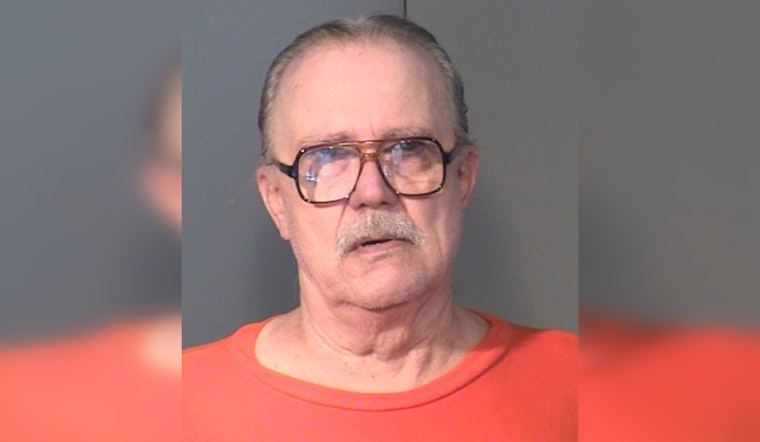
The Arizona Supreme Court on Friday, May 15, 2026, upheld the death sentence for Edward Littleton McCauley, leaving in place the punishment for the 2014 killing of his estranged wife. McCauley was convicted of first-degree murder in 2019 and has spent years fighting the verdict and sentence on appeal. For now, the ruling keeps his capital punishment intact as state legal avenues narrow.
The killing and the evidence
According to Arizona Supreme Court case documents, McCauley waited outside his estranged wife’s home on the night of Nov. 23, 2014. When she walked out toward her truck, he confronted her and opened fire, shooting eight times and hitting her in multiple places. The record notes that he fled, later sent profanity-laced text messages to family members claiming responsibility, and kept a calendar entry marked “judgment day.” Those details became core pieces of the state’s narrative at trial, painting a picture of planning rather than impulse.
Conviction and sentence
A Maricopa County jury found McCauley guilty of first-degree murder in November 2019 and returned a death sentence in January 2020, according to the Maricopa County Attorney's Office. Prosecutors said jurors determined the killing was “especially heinous or depraved,” an aggravating factor that cleared the way for a capital sentence. The county’s statement described the crime as calculated and underscored that the same jury that heard the evidence also chose death as the penalty.
High court leaves sentence intact
The Arizona Supreme Court rejected McCauley’s appeal and left his death sentence in place on May 15, 2026, as reported by KTAR News. The decision followed a review of a lengthy appellate record that challenged jury instructions, accused prosecutors of misconduct, and attacked several trial rulings. After going through those claims, the justices declined to disturb the conviction or the sentence, effectively closing the door on further relief in Arizona’s state courts.
What it means for Arizona's death-penalty landscape
McCauley remains one of roughly a hundred people on Arizona’s death row at a moment when the state is again moving to carry out executions. The Arizona Department of Corrections, Rehabilitation & Reentry has already set an execution date of May 20, 2026, for another inmate, Leroy Dean McGill. The ADCRR confirms that McGill’s warrant has been issued, a sign that the machinery of capital punishment is not just on the books but being actively used. National tracking organizations echo that Arizona continues to have a sizable death-row population, with Death Penalty Information Center data placing the state’s tally in the low hundreds.
Appeal claims and next steps
McCauley’s appellate team raised ten principal issues, arguing there was prosecutorial misconduct, flaws in jury selection during voir dire, and errors in how mitigation and aggravating factors were handled. Those arguments are laid out in the court’s case summary, and Arizona Supreme Court documents show that the claims were preserved and considered on appeal. With the state high court now having ruled, McCauley’s lawyers can still look to the federal courts or pursue executive clemency, but within Arizona’s judicial system the path to changing his sentence has largely run out.





