

























































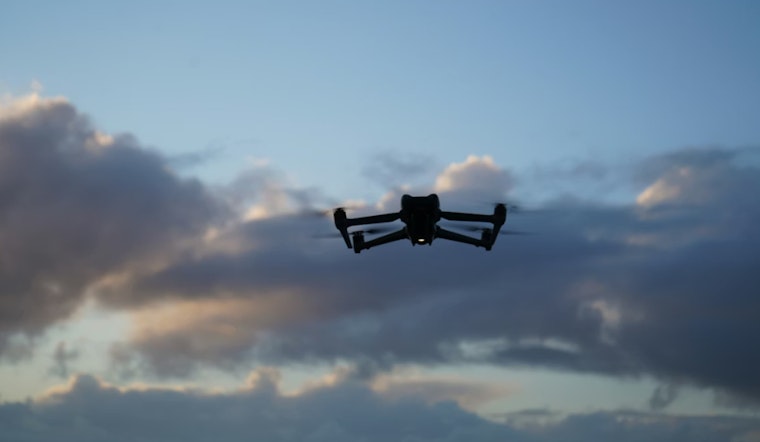
Massachusetts drone startups that used to fuss over crop health and manicured fairways are suddenly on the Pentagon’s speed dial. Small teams that once sold flying cameras to farmers and golf courses are retooling their assembly lines, hiring shop-floor workers, and stripping costs out of their designs so they can churn out cheap attack and surveillance drones. The shift could turn quiet Charlestown offices and Wilmington workshops into something much closer to wartime production lines.
The Defense Department’s Drone Dominance program is a four-phase, roughly $1.1 billion effort to field hundreds of thousands of low-cost small unmanned aerial systems over the next two years. The first phase alone calls for roughly 30,000 systems, according to Breaking Defense.
From Ascent To Robinson Unmanned: Torrance Cranks Up
One of the clearest signs of that scale-up came when Robinson Helicopter Company folded Massachusetts startup Ascent AeroSystems into a new Robinson Unmanned division and said it would assemble Ascent's coaxial small UAS at its vertically integrated Torrance, California, factory, according to an April 2024 press release by Robinson Helicopter Company. Company materials and a March 2026 announcement outline a product line of compact coaxial platforms that Robinson describes as rugged and production-ready. The goal is to marry Ascent's modular designs with Robinson’s high-volume manufacturing muscle.
GreenSight’s Jump From Golf Greens To Guided Strikes
Boston-based GreenSight, which originally sold drones and software to agribusinesses and golf courses, has pivoted into military work and is already selling one-way fixed-wing strike systems to U.S. forces, company pages and reporting show. As reported by The Boston Globe, GreenSight has sold about $5 million worth of systems to the military so far this year and expects roughly $9 million more by year’s end, and the company’s defense pages list tactical products such as the Pikeman and Warlock strike platforms. Co-founder Joel Pedlikin told the Globe the firm builds prototypes in Charlestown while raising capital to expand production across New England.
Price Targets Put Factories On The Front Line
The Pentagon is pressing suppliers to hit aggressive price targets, roughly $5,000 per unit for the initial buys, with a goal of cutting costs to about $2,000 apiece for large production runs. The math is designed to favor mass-produced, expendable platforms over higher-end, pricey systems, defense reporting shows. The Gauntlet evaluations put production readiness at center stage, with officials and industry watchers saying successful vendors have to prove they can deliver thousands of airframes on time, in line with the "factory is the weapon" framing used by analysts covering the program. That requirement has nudged companies to rethink supply chains and factory layouts instead of only iterating capabilities in the lab, according to Axios.
What It Means For Massachusetts
Local leaders say the rush to arm the skies will bring jobs along with tougher ethical questions as civilian vendors scale into lethal missions. "Making things is something we stopped doing, as a focused national thing, almost 40 years ago," Stephen Flynn of Northeastern University's Defense Industrial Base Institute told The Boston Globe, arguing that the United States has to rebuild manufacturing capacity. For Wilmington and Charlestown, the near-term story is a scramble to hire, to meet Pentagon timetables, and to prove that small shops can scale up into true factories.




