

























































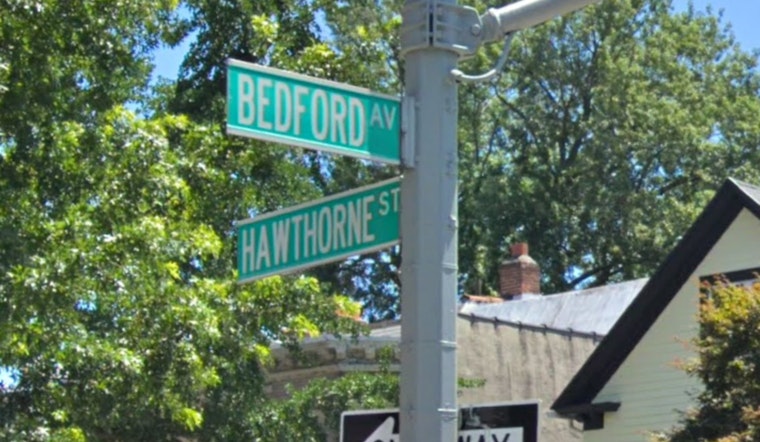
Weeks of pile driving at a Bedford Avenue construction site have Prospect Lefferts Gardens neighbors saying their homes are literally shaking apart. Residents around the Bedford Avenue lot say sudden jolts rattled dishes, opened fresh hairline cracks in plaster and left them wondering what, exactly, was happening beneath their feet.
On May 7, firefighters were called after bricks fell from a nearby co-op building, a scare that pushed simmering anxiety into full-blown alarm. Several neighbors had already logged 311 complaints about vibration and apparent damage tied to the ongoing foundation work.
Public records show that pile driving at 1935 Bedford Ave moved forward without the required real-time vibration monitoring, even as the Department of Buildings issued, then later rescinded, two stop-work orders while weighing penalties. According to THE CITY, agency filings connect roughly $27,321 in DOB fines to a former owner of the property, about $19,196 of which have been paid, and the current owner has also drawn recent violations. The contractor on the site, Lead It Builders LLC, received a $5,000 violation on May 5 tied to the pile-driving operation, the outlet reported.
City property tax and ownership documents list the lot as belonging to Bedford 1935 DAF LLC, which acquired the parcel in early 2025 and appears on the municipal property portal under BBL 3050430005. As shown in city property records, the assessment and ownership history for the site is publicly accessible, and that 2025 purchase is now under the microscope as neighbors and inspectors look for who greenlit the foundation work.
Neighbors, city inspectors and an outside engineer told officials that the impact pile driving was far more intense than expected and urged the use of quieter alternatives. One resident, Dean Foster, told inspectors the shaking felt "as if a train were running through the house," a description later shared with reporters. The project engineer, Gary Vinbaytel, filed a report advising that micropiles would be a less disruptive foundation method and wrote in an email to the city that the work was following DOB rules and using monitoring, according to THE CITY. The owner and contractors have indicated they will cooperate with city inspections while construction continues under DOB oversight.
How the city regulates pile driving
New York City guidance calls for pre-construction condition surveys and vibration monitoring whenever pile work takes place near sensitive structures. Those requirements trace back to DOB Technical Policy and Procedure Notice 10/88 and related City Environmental Quality Review materials. As laid out in city planning and environmental review documents, monitoring programs are supposed to set clear thresholds for vibration, track peak particle velocity and protect neighboring buildings, per City planning guidance. How well that system works on the ground depends on accurate monitoring data and swift DOB intervention when problems crop up, something neighbors argue has not been consistent in this case.
Legal and safety implications
If monitoring is missing or vibration limits are exceeded, the Department of Buildings can issue violations, order work to stop and impose fines, and neighboring owners can rely on pre- and post-construction surveys as evidence in any future claims. Construction law specialists say adjacent-property owners may also pursue civil remedies for structural damage when monitoring logs or inspection records point to negligence, according to construction law guidance. How aggressively the city enforces its own rules, and whether the contractor changes foundation methods, will likely shape any repairs or legal fights that follow.
On Bedford Avenue, residents say they want the project to move quickly to micropiles or another low-vibration technique, and they want clearer monitoring records before work ramps back up. For a fast-developing stretch of Brooklyn, the clash has become a test of how to keep building upward without shaking down the people who already live next door.



