

























































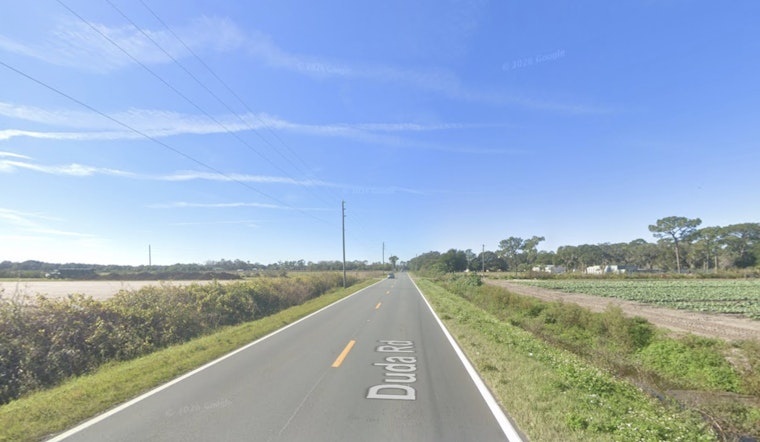
Authorities have identified the driver killed in a violent, early-morning head-on crash on Duda Road in Belle Glade as 35-year-old Kevin Hudson. Deputies say his Nissan Altima slammed into a semi-truck hauling corn and became wedged under the tractor-trailer, killing him at the scene. The semi driver suffered minor injuries, and the load of corn spilled across the roadway while crews worked to reopen the road.
Crash details and identification
According to WPEC (CBS12), the crash happened around 6:19 a.m. in the 900 block of Duda Road. Investigators say Hudson was driving his Altima south in the northbound lanes when he hit the oncoming tractor-trailer head-on. The impact ripped away the Altima's hood and roof, leaving the car crushed beneath the semi and making it difficult for deputies to immediately determine who was behind the wheel.
Palm Beach County Sheriff's Office deputies told WPEC (CBS12) that Hudson was not wearing a seatbelt and was pronounced dead at the scene.
Where it happened
Duda Road cuts through the Everglades Agricultural Area, a working stretch of farmland west of Lake Okeechobee where big rigs routinely haul produce, including sweet corn. The University of Florida's Everglades Research & Education Center notes that the EAA supports crops such as corn and sugarcane and serves as a hub for field research and extension work. That mix of heavy agriculture and commercial trucking helps explain why roads like Duda often see substantial truck traffic and why cleaning up a spilled load quickly becomes a priority for first responders.
Cleanup and investigation
WPEC (CBS12) reports that the semi driver escaped with only minor injuries. Crews moved quickly to clear the corn scattered across the 900 block of Duda Road so the lanes could be reopened. The Palm Beach County Sheriff's Office is investigating what led to the wrong-way crash and has not released any additional information. Investigators are asking anyone with details about the collision to contact the sheriff's office.
Why wrong-way crashes are so dangerous
Federal safety investigators say wrong-way crashes do not happen often but are far more likely to be deadly because they tend to involve high-speed, head-on impacts. A special investigation by the National Transportation Safety Board into wrong-way driving found that a combination of roadway engineering changes, better signage, and monitoring and intervention programs can help reduce these collisions, and that driver impairment and confusion are frequent factors (NTSB). The report stresses that smarter roadway design and improved wrong-way detection are key tools to keeping similar tragedies from unfolding on rural routes like Duda Road.





