

























































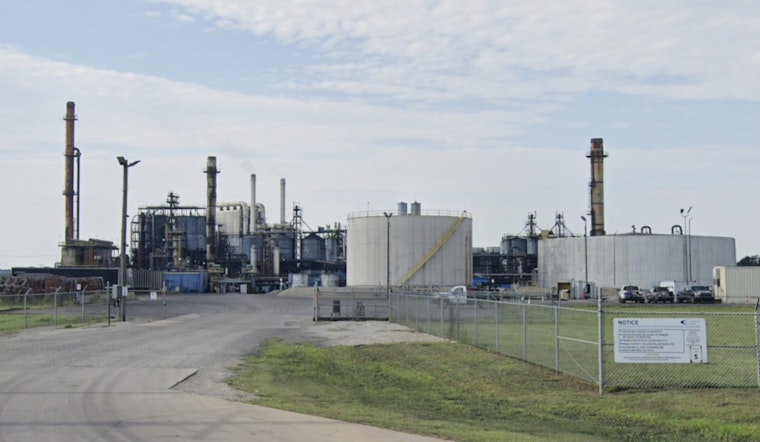
Ponca City residents woke up this week to find a fine black film on cars, lawns and playground equipment, a grim throwback to a pollution fight many believed was in the rearview mirror. Tribal leaders and neighbors say the fallout has revived old fears about health and property damage and left families pushing hard for answers.
People on the north side of town describe the residue as sticky, stubborn and unmistakably industrial. “It wasn’t dirt. It was just black, like coal,” one resident told reporters. Several say pets and children’s toys have been stained. Those accounts, along with images and complaint records showing black dust across neighborhoods, were compiled in a recent local investigation by KOCO.
Plant history and past settlements
The powdery material residents point to is carbon black, an industrial pigment used in products such as tires and plastics. According to prior reporting and regulatory records, the plant south of Ponca City has produced carbon black for decades.
The community has been here before. In 2009, a federal judge approved a $10.5 million settlement between the Ponca Tribe, nearby landowners and Continental Carbon, resolving a long-running pollution lawsuit, as reported by the Journal Record. StateImpact Oklahoma later reported that the company entered a 2015 consent decree with the U.S. Environmental Protection Agency requiring it to reduce emissions.
Regulatory limits and monitoring rules
On paper, the operation is supposed to stay within tight limits. Permit memos from the Oklahoma Department of Environmental Quality require visible emissions to stay below a 20 percent opacity limit, with a six-minute average never allowed to exceed 60 percent. The paperwork also spells out baghouse requirements, monitoring obligations and fugitive-dust controls for the Ponca City facility.
Those technical limits and control measures are laid out in state permitting documents and in the facility’s consent-decree implementation plan, according to Oklahoma DEQ.
New complaints and community alarm
Residents say that despite those rules, complaints have been piling up at the state agency since 2024. Some investigations, they contend, were wrapped up quickly, feeding frustration and distrust.
Complaint records obtained by KOCO show nearly two dozen reports filed with Oklahoma DEQ over the past two years. In one 2024 case, an inspector recorded unusually high opacity readings. The station also reported the experience of a producer who said she returned from a short visit to Ponca City with black residue on her skin.
Legal and health stakes
The health impacts of repeated exposure to fine particulate matter and carbon-based soot have been documented in previous investigations, and earlier federal enforcement action has already forced changes at the plant.
In 2015, the U.S. Environmental Protection Agency announced a settlement and consent decree requiring Continental Carbon to install emission controls, pay civil penalties and fund mitigation projects, according to the EPA.
What officials say and what comes next
Local leaders insist they are not sitting on their hands. Earlier this year, Ponca City commissioners approved a joint resolution with the Ponca Tribe calling for a clear identification of the dust’s chemical makeup and its sources. City officials say they have been pressing Oklahoma DEQ for more monitoring and faster follow-up.
Coverage of that commission meeting details the specific requests and notes that city leaders met with DEQ staff to discuss monitoring plans. The city and the tribe say they plan to keep pushing for hard data to guide any response, according to Kay NewsCow.
In the meantime, neighbors say daily routines are disrupted by dirty cars, stained laundry and the constant chore of wiping away soot, along with a nagging fear that the dust might be more than a cosmetic problem. Officials say monitoring is underway and that any formal action will depend on sampling and lab results before regulators or the company take further enforcement steps.





