

























































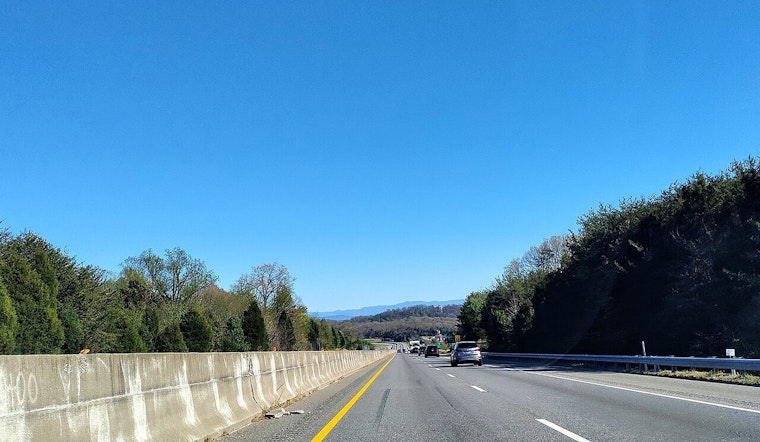
Blount County leaders hit the brakes this week on a proposal to pour local tax money into the long-debated Pellissippi Parkway extension, after a packed workshop turned into a loud, point-by-point takedown of the plan. Residents argued the project would slice through homes and working farms, and commissioners opted to table the funding measure for now while they try to answer mounting questions about timing, costs, and potential property takings.
According to WATE, county staff quietly pulled the resolution about an hour before Thursday's public workshop. The measure would have committed local dollars to speed up early work on the extension. Jay Clark, president of Citizens Against the Pellissippi Parkway Extension, described the showdown to WATE as "the people versus the partnership," and residents, including Jessica Hannah and Nick Bright, said the fast-track push landed with little meaningful public notice. WATE reported that the same resolution is expected to resurface on the commission agenda next month.
Where The Project Stands Now
The proposal on the table would extend State Route 162 to connect SR 33 (Old Knoxville Highway) with US 321 (Lamar Alexander Parkway), creating a new controlled-access, four-lane corridor running through eastern Blount County. Per the Tennessee Department of Transportation, money for right-of-way acquisition is penciled into TDOT's 10-Year Plan in Fiscal Year 2032, with construction currently estimated to start in Fiscal Year 2036.
Landowners And Farms In The Crosshairs
Neighbors who showed up at the workshop warned that the highway could chew up pieces of long-held family land and productive farms, while shrinking the county's rural tax base. Coverage by Hellbender Press notes that the current corridor layout could reach roughly 110 properties, including at least 10 farm parcels, much of it inside the county's urban growth boundary. That anxiety over losing fields and fragmenting family operations fueled much of the testimony, with residents repeatedly stressing that once the farmland is gone, it is not coming back.
How Officials Tried To Speed The Timeline
City and county leaders had been looking for a shortcut on TDOT's schedule through the agency's Statewide Partnership Program. Minutes from the regional planning body show that Alcoa, Maryville and Blount County submitted a 2024 SPP application, and that TDOT announced an SPP award on April 7, 2025, that would let right-of-way work start sooner than the normal timeline. Knoxville Regional TPO records also show the City of Alcoa asking for 10 million dollars in STBG-L funds to jump-start that effort.
Price Tag And The Money Question
Just how much the project will ultimately cost depends on whom you ask and when, but TDOT's own public files currently peg the "estimate for all phases" at about 160.7 million dollars. That breaks down to roughly 4.3 million dollars for preliminary engineering, 9.7 million dollars for right-of-way, and 146.7 million dollars for construction. In a set of formal responses to public comments, TDOT emphasizes that the numbers are preliminary and will be adjusted as design work and appraisals move ahead. Skeptical residents have seized on that caveat, arguing it makes little sense to pledge local funds to accelerate a project whose price tag is still a moving target.
Legal History And What Comes Next
Tabling the resolution does not end the fight. County officials still have to decide whether they are willing to put local taxpayer dollars into a corridor that TDOT itself does not expect to start building until well into the next decade. The extension carries a lengthy legal and political backstory, including a lawsuit opponents brought against federal and state transportation agencies in the early 2000s. The threat of eminent-domain takings for right-of-way remains one of the biggest fears for landowners, a concern reflected in court records and advocacy materials. Past filings can be found on OpenJurist, and opponents are still organizing through Citizens Against the Pellissippi Parkway Extension as the project inches forward on paper, even if local funding is now on pause.





