

























































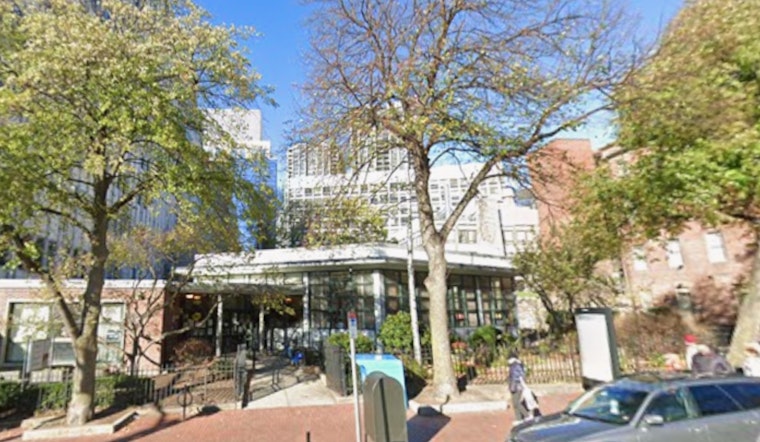
Boston’s neighborhood libraries are quietly turning into two-for-one civic specials: book stacks on the bottom, apartment stacks on top. City officials have started rolling out a model that pairs expanded, modernized branch libraries at the base of new mid-rise buildings with income-restricted housing above. For neighbors, the trade-off is simple enough: a bigger branch and new homes, all a short walk from transit.
As reported by the Boston Business Journal, planners and developers are treating library branches as a way to add transit-oriented housing without giving up public land. The Business Journal points to the West End plan as a sign that this approach is shifting from one-off experiment to an emerging city policy.
West End Project Moves Forward
The City of Boston has tentatively designated Preservation of Affordable Housing (POAH) and Caste Capital to remake the West End branch at 151 Cambridge Street into a new two-story library topped by 119 income-restricted apartments, according to the City of Boston. Design filings and community meetings indicate the project would stack roughly 12 residential stories above the branch, with construction targeted to start in late 2026 and run for about two years, the Beacon Hill Times reports.
Design, Units and Amenities
Plans call for a mix of studios through three-bedroom units, resident amenity spaces, a courtyard, and a publicly accessible plaza next to the Otis House, while program materials highlight an expanded teen room and community learning space, according to Boston.com and the project site. The city says 40 of the 119 apartments would be reserved for households earning up to 30 percent of Area Median Income, with the remaining 79 units aimed at households up to 80 percent of AMI. Early coverage of the initial overhaul appeared in an innovative overhaul story.
A Citywide Play
The West End effort is part of the mayor’s Housing With Public Assets initiative, which the city describes as a strategy to place housing on top of municipal sites while keeping public services in place, per the City of Boston. Other projects in the pipeline include Parcel R-1/55 Hudson Street in Chinatown, a BPDA-designated site expected to bring about 110 affordable units with a new Chinatown branch, and 555-559 Columbia Road in Dorchester, which has been linked to an Upham’s Corner branch and roughly 33 affordable homeownership units, according to BPDA and city records.
Costs and Constraints
Co-locating libraries and housing can pack in public benefits, but it does not come cheap. These projects typically lean on a complex mix of subsidies and developer payments. The Boston Globe reported that the West End plan was initially projected to cost more than $835,000 per unit when first proposed, and cautioned that a slowdown in commercial development, along with the linkage payments it generates, could tighten future financing for similar deals.
What Comes Next
The West End proposal remains in Article 80 design review and is still open for public comment, with project pages and filings outlining next steps and community engagement opportunities, according to BPDA project materials and the project’s documents. If the team secures financing and approvals on schedule, developers expect to move into construction in 2026-27, with interim services arranged for neighbors while the branch is rebuilt, the Beacon Hill Times reports.





