

























































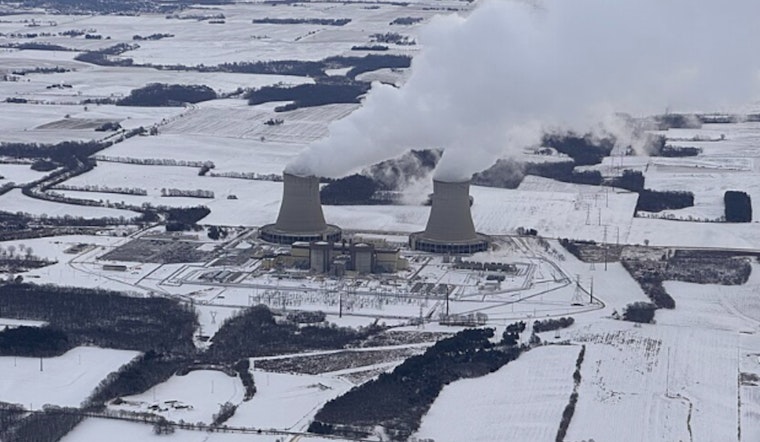
Constellation is rolling out major turbine and equipment upgrades at its two biggest Illinois nuclear stations, Byron and Braidwood, aiming to squeeze more always-on megawatts onto the grid as data centers mushroom across the region. The work, part of roughly an $800 million modernization push, is meant to pump out additional carbon-free power for utilities and the hyperscale computing customers that keep calling for more.
The company first laid out the multi-site program in 2023 and said the uprates would be phased in starting in 2026, with full implementation slated for 2029, according to Constellation. Federal filings show the Nuclear Regulatory Commission has been reviewing related exemption requests and an environmental assessment, which the agency published in April. The NRC said it issued a finding of no significant impact tied to Constellation’s filings.
Schedule And What’s Already Happening At Byron
Local reporting pegs the combined output boost at roughly 158 megawatts and says Constellation began work at Byron in March 2026, with the Byron uprate expected to wrap around 2028. Braidwood’s upgrades are slated to start in spring 2027 and finish around 2029, according to the Chicago Tribune. Byron was already in the headlines in March, when an outage-related chemical exposure sent several workers for treatment; local outlets reported that Constellation contained the release and that there was no off-site threat, according to FOX 32.
Why Data Centers Are In The Mix
Hyperscale data centers live or die on firm, 24/7 power for AI training and large-scale cloud services, so operators have been hunting for long-term deals tied to always-on generation. Companies including major cloud and social-media firms have turned to nuclear offtake agreements to lock in clean, reliable capacity, and that market signal has pushed utilities and plant owners to accelerate uprates and relicensing work, reported CBS Chicago. At the same time, Gov. J.B. Pritzker has nudged state policy toward expanding nuclear capacity, issuing an executive order and backing legislation aimed at adding gigawatts of clean generation to meet rising demand, according to the Illinois executive office.
Local Jobs, Outages And Trade-Offs
These uprates are not just about headline megawatts, they come with waves of outage work and local hiring. Local reporting and Constellation materials note that refueling and turbine replacement outages bring in large contractor crews, from hundreds to more than a thousand workers, which fills hotels and boosts restaurants in plant communities during the work windows. Shaw Local has detailed the outage logistics, while Constellation’s site materials outline the company’s staged approach to uprates and its community outreach around the projects. Constellation
Regulatory And Financial Outlook
The upgrade program leans on a mix of federal and state incentives, and that policy backdrop matters. Some zero-emission and carbon mitigation programs that helped keep existing plants viable in earlier years are set to change in the near term, which analysts and local reporting say will shape the economics of these uprates. The Chicago Tribune has highlighted those subsidy timelines and how they factor into Constellation’s planning, while the NRC’s environmental assessment and finding of no significant impact indicate that the agency does not see a major environmental barrier to the uprates at this point, according to the NRC. As Braidwood’s plant manager told the Tribune, “the uprate projects combined will add as much generating capacity as a new large nuclear reactor.”
For Illinois, the strategy is a practical one: uprating existing reactors can move faster than building new large units, and it keeps steady, zero-carbon megawatts on the grid as data center and industrial demand climbs. Expect years of outage work, local hiring and policy debates as communities weigh jobs and reliability benefits against water, workforce and financing trade-offs.



