

























































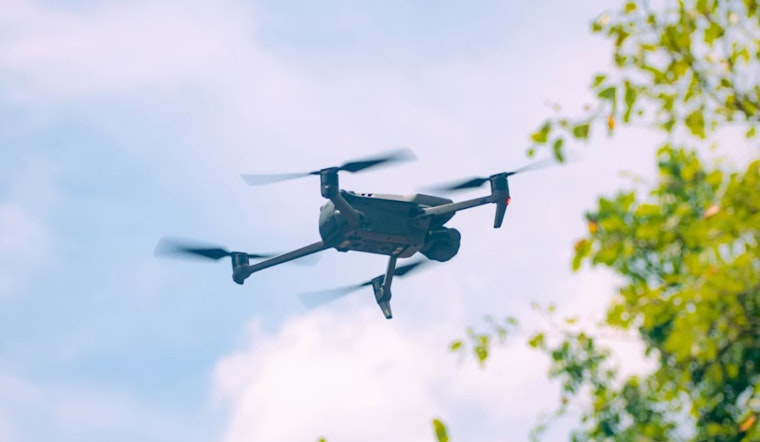
The Pentagon is asking Congress for a $54.6 billion surge in funding to scale up drone swarms and other autonomous systems, a request that has senators and civil-society groups reaching for the brakes. At a recent hearing, lawmakers pressed top defense officials on how the department plans to govern, train for and legally authorize these weapons, warning that policy may already be trailing the tech. The money would turn the Defense Autonomous Warfare Group from a modest test shop into one of the Pentagon's biggest acquisition engines.
What's in the $54.6 billion request
According to Breaking Defense, the administration's fiscal 2027 proposal seeks roughly $54.6 billion for the Defense Autonomous Warfare Group, with about $1 billion in the regular base budget and about $53.6 billion tucked into a reconciliation account. That single line item would mark a huge jump from the roughly $225 million DAWG received in fiscal 2026 and, analysts point out, would actually surpass the Marine Corps' own service request. Pentagon officials say the funding is meant to speed research, development and rapid procurement of attritable drones and collaborative autonomy tools.
Senators and watchdogs raise alarms
Senators on the science-priorities panel zeroed in on whether guardrails can keep up with the cash. "The policy architecture really has to scale with it," Sen. Joni Ernst cautioned, while Sen. Elissa Slotkin argued that "I do not believe that a private-sector company should get to decide what the rules are," as reported by Military Times. Lawmakers pointed to gaps in doctrine, training and legal auditing even as the Pentagon prepares to field more capable and more autonomous systems.
DARPA's DICE and the research push
On the research side, DARPA has launched a program called Decentralized Artificial Intelligence Through Controlled Emergence, or DICE, to explore multi-agent AI architectures that can coordinate without a single critical node. The agency's program page lists a proposers day on May 29 in Arlington, Virginia, for would-be participants. DARPA says DICE will focus on simulation and algorithmic control methods that seek to restrain emergent behavior while improving scalability and resilience. The agency is framing the work as foundational research rather than a direct pipeline to near-term weapons systems.
Industry moves: Shield AI and LUCAS
Industry is not waiting for Congress to catch up. Defense startup Shield AI says the Pentagon has chosen its Hivemind autonomy stack to serve as an "AI pilot" for the LUCAS one-way attack drone, with an operational demonstration planned for this fall, according to DefenseScoop. The company says the software is designed to enable coordinated behavior and let a single human operator supervise multiple drones in environments where communications are spotty or contested.
Civilian deaths and the accountability gap
The speed of deployment is not just a budget story. A joint investigation by monitoring group Airwars and The Independent identified Abdul-Rahman al-Rawi as a civilian killed in a strike that U.S. officials have at times described as involving AI-assisted targeting. U.S. Central Command later told investigators it had "no way of knowing" whether AI was used in that strike, according to reporting by The Independent. The case has become a rallying point for critics who argue that accountability and forensic tracing of targeting decisions need to be nailed down before any major expansion of autonomous systems.
What's not funded: doctrine, training and force design
Outside analysts and some lawmakers say the fiscal 2027 plan leans heavily toward hardware, software and research funding while offering relatively little detail on doctrine, training and force redesign for operating these systems safely. They warn that fielding large numbers of autonomous platforms without matching investments in rules, exercises and organizational change could create confusion on the battlefield and increase the risk of civilian harm, a concern highlighted in recent defense analysis and reporting. The scale of the proposal, which would vault DAWG from a small test budget into a multibillion-dollar program in a single year, sits at the center of those worries.
What comes next in Washington
Congress now has to decide whether to approve the reconciliation account that holds most of the DAWG funding and whether to attach new oversight or reporting requirements if it does. Pentagon leaders are pitching the broader move toward rapid procurement and attritable mass as a generational investment in deterrence and speed, but lawmakers have already signaled they will demand clearer records, doctrine and legal guardrails, according to Breaking Defense. Near-term markers include DARPA's May 29 DICE proposers day and the industry demonstrations that Shield AI and others say are coming this fall.
Local context
Hoodline has previously tracked the Pentagon's wider robotics spending and the regional industrial rush it has ignited; see coverage of the Pentagon's $151 billion robot blitz for background. For D.C. readers, the next few weeks will reveal whether Congress and the Pentagon can match their hardware ambitions with doctrine, training and transparent accountability before autonomous systems roll out at scale.



