

























































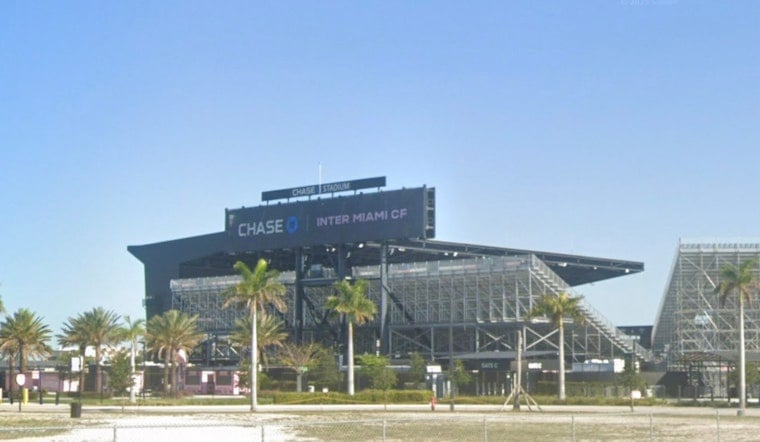
With the World Cup on the horizon, Fort Lauderdale turned Chase Stadium into a full-on disaster movie set Wednesday, staging a sprawling training drill built around a simulated chemical exposure after a drone attack. Firefighters, police and regional hazmat teams worked through the scenario using volunteer victims to pressure-test mass decontamination, patient tracking and cross-agency communications under tense, realistic conditions.
The exercise kicked off around 9 a.m. and stretched into the afternoon at Chase Stadium, 1350 NW 55th St., with roughly two dozen volunteers playing casualties, according to WPLG Local10. Crews set up decontamination corridors, patient-processing areas and dedicated radio channels to rehearse how they would move large numbers of exposed people off the field and into treatment zones. Officials repeatedly emphasized that there was never any danger to the public during the drill.
Who Took Part
Fort Lauderdale Fire Rescue spokesman Frank Guzman told WIOD that local hazmat teams and the FBI joined the operation, running crews through patient triage and large-scale decontamination scenarios. The Local Emergency Planning Committee oversaw the event, pulling together municipal and county responders to drill real-time coordination under a single unified command. Residents were warned ahead of time to expect a heavy presence of emergency vehicles around the stadium but were assured there was no actual threat.
What The Drill Simulated
CBS News Miami reported that the scenario "acts out what happens when people are exposed to hazardous material," giving first responders a chance to practice working in protective gear, caring for victims and keeping contamination from spreading. Several outlets described the storyline as a chemical release triggered by a drone strike, reflecting broader concerns about unmanned aircraft at packed events, according to WPLG Local10. The heightened realism allowed teams to sharpen evidence-preservation tactics, maintain scene safety and refine victim tracking systems that would be crucial if something similar unfolded during an actual match.
Funding And Regional Prep
Wednesday’s operation is one piece of a broader run-up to the tournament, as host cities finalize layered security plans. FEMA has allocated $625 million to the 11 U.S. World Cup host cities to pay for drills, background checks and cybersecurity efforts, according to FEMA. In South Florida, media reports indicated the Miami City Commission was expected this week to accept a roughly $6.5 million FEMA/DHS grant tied directly to World Cup preparedness, a move that would bankroll training and equipment purchases, as reported by WIOD. Federal grant records also show the City of Miami received roughly $6.6 million in a SAFER project grant in March, which officials say strengthens regional readiness, per GovTribe.
What Residents Should Expect
Organizers said drills like Wednesday’s will keep popping up as agencies tighten their game plans for major events, so residents should not be surprised to see lights-and-sirens activity near stadiums on training days. Fort Lauderdale’s hazardous-materials program notes that strong partnerships across agencies and frequent, realistic practice are central to safely handling chemical incidents, and the city reiterated that there was no public risk during the exercise, according to Fort Lauderdale Fire Rescue.



