

























































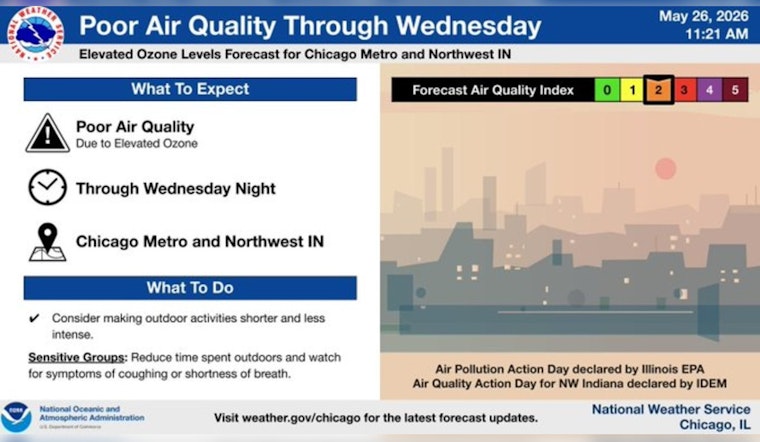
Chicago and most of its suburbs are under an air quality alert as unhealthy ozone levels grip the region from Tuesday into at least Wednesday, putting a special spotlight on kids, older adults and anyone with lung problems. With the air expected to stay gunky for a bit, officials are nudging residents to ease off activities that pump more pollution into the sky while the alert is in place.
The National Weather Service issued the alert late Tuesday morning after the Illinois Environmental Protection Agency declared an Air Pollution Action Day for the greater Chicago metro through Wednesday night. The alert covers McHenry, Lake, Kane, DuPage, Kendall, Grundy, Cook and Will counties and names ozone as the main pollutant to watch. “Active children and adults, especially people with pulmonary or respiratory disease such as asthma, should limit prolonged outdoor activity,” the agency warned.
Northwest Indiana is getting its own round of bad air advisories. A second alert was set to kick in at midnight for Lake, Porter, Newton and Jasper counties, while LaPorte County’s alert is scheduled to begin Wednesday morning, according to NBC 5 Chicago.
What officials are advising
Health and environmental officials are pushing a double message: protect vulnerable people and cut emissions wherever possible. The Illinois EPA explains that an Air Pollution Action Day is called when the Air Quality Index is expected to hit or exceed the “Unhealthy for Sensitive Groups” range for multiple days. To help curb ozone-forming pollution while the alert is active, the agency recommends avoiding engine idling, postponing gas‑powered yard work and combining car trips so fewer miles are driven.
Why ozone spikes happen
Ground‑level ozone is a bit of a chemistry experiment in the sky. It is not released directly; instead, it forms when nitrogen oxides and volatile organic compounds from sources like vehicles and power plants react in sunlight and heat. That photochemical reaction runs hottest on warm, sunny days with light winds, which is why ozone often peaks in the late afternoon, according to AirNow.
Chicago's ozone problem, in context
These Action Days are not one‑off flukes for the region. The American Lung Association’s 2026 “State of the Air” report ranked the Chicago‑Naperville metro area among the worst in the country for ozone, estimating roughly 18 days of unhealthy ozone per year and slapping the region with an F grade for ozone pollution. The report notes that summertime heat plus local emissions routinely line up to create short runs of unhealthy air.
How to check the air and protect yourself
To see what you are breathing in real time, residents can check current, location‑specific AQI readings and pollutant details on AirNow and use the NowCast value when planning outdoor plans or workouts. People living with asthma, COPD or heart disease are advised to follow their action plans, keep quick‑relief medications on hand and shift exercise indoors until the alert ends. Employers that rely on outdoor crews are urged to watch the forecasts and adjust schedules to limit workers’ exposure while ozone is high.





