

























































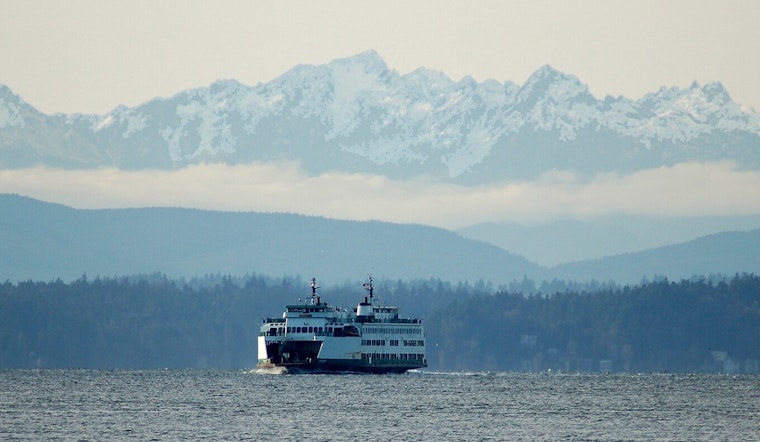
Puget Sound commuters who lean on Washington State Ferries have been riding out a rough stretch of sudden cancellations and marathon waits in recent years, and a new bipartisan bill in Congress is promising help. Riders and local businesses say crew shortages and aging vessels have meant missed appointments, events and work, and in some cases scrambling for last-minute hotel rooms when sailings are scrubbed. The Federal Enhancement and Revitalization of Reliable Infrastructure for Essential Seaways, known as the FERRIES Act, would steer hundreds of millions of federal dollars to ferry systems if Congress signs it into law.
What’s in the FERRIES Act
Introduced in March by Rep. Emily Randall, the FERRIES Act would significantly expand federal ferry programs and overhaul the rules that decide who gets federal ferry grants. As outlined by Rep. Nicole Malliotakis, the bill would increase the Federal Transit Administration’s Passenger Ferry Grant Program to as much as $550 million a year and create or grow funding dedicated to rural routes and electric or low-emission ferries. The proposal also aims to let operators that serve both urban and rural communities apply across programs, which supporters say could open the door to larger and more predictable investments for Washington State Ferries and other regional providers.
Local riders and officials react
In Puget Sound, riders and elected officials greeted the proposal as a potential lifeline for a system that has struggled to stay on schedule. "Unreliable service means missed birthdays, tickets to sports and concerts, hours spent waiting at the terminal, or worse," ferry commuter and small-business owner Jodi Davis told KOMO. Kitsap County Commissioner Katie Walters said the funding boost could strengthen connections between Seattle and Kitsap for work, school and medical appointments, and maritime labor leaders, including Dan Twohig of the Masters, Mates and Pilots, told the station they plan to help press the bill forward.
How much federal money is already available?
The federal programs the bill would reshape are currently far smaller than what supporters are seeking. The Federal Transit Administration's FY2026 notice of funding opportunity shows roughly $105 million available this year for the Passenger Ferry Grant Program, with separate pots for electric and rural-ferry grants, according to the Federal Transit Administration. Backers say scaling the program to hundreds of millions of dollars annually would let agencies tackle big-ticket capital projects, such as new hybrid-electric vessels, terminal electrification and long-deferred maintenance, instead of relying on smaller, piecemeal awards.
What happens next
The FERRIES Act, filed as H.R. 7774, was introduced in early March, and supporters are working to fold it into the next surface-transportation reauthorization. The Puget Sound Regional Council circulated a letter signed by 42 local elected officials urging congressional leaders to include the measure, according to PSRC. Even if the authorization language survives committee review, Congress would still have to appropriate the money in annual spending bills, which means any large-scale funding remains dependent on future action in Washington, D.C.
For ferry riders, the pitch is straightforward: predictable federal funding could speed vessel replacements and shore-side upgrades that reduce cancellations and make commutes more reliable. But passage and full funding will require bipartisan support in key committees and in yearly appropriations, a process that can take months or longer. In the meantime, riders and local officials will be keeping one eye on the departure boards and the other on Capitol Hill, waiting to see if the promised cash actually lands.





