

























































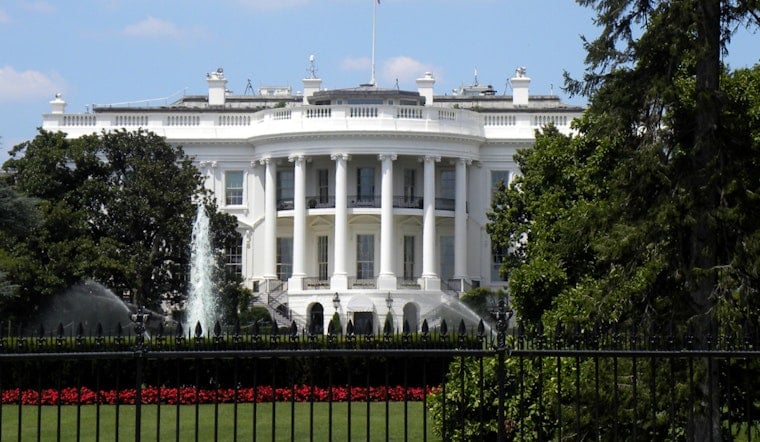
The White House has quietly greenlit roughly $9 billion to snap up advanced Nvidia superchips and the specially cooled, high-power data centers needed to keep them humming. Intelligence officials say the cash is meant to plug a glaring compute gap that has kept agencies from running the latest frontier AI models inside classified networks.
Reporters say the administration signed off on a classified request on May 22 that steers much of the money toward systems built around Nvidia’s Grace/Blackwell family, according to The Philadelphia Inquirer. Analysis at Tech Buzz frames the move as one of the largest federal AI infrastructure bets in recent memory and says procurement will likely focus on H100 and Blackwell-class accelerators. Congress still has to sign off on the funds, but officials are already reprogramming roughly $800 million to jump-start some early buys.
The decision follows a broader Pentagon push to get commercial AI vendors onto classified networks, with the Defense Department striking agreements with Nvidia, Microsoft, AWS and others for IL6/IL7 deployments, TechCrunch reports. Those secure clouds are physically separate and slow to retool, creating a gap that intelligence agencies say only dedicated, liquid-cooled racks can close, a point stressed in reporting from DefenseNews. That combination of scarce chips and long build times for power and cooling is what officials describe as the real bottleneck.
How Far $9 Billion Really Goes
High-end GPUs are still brutally expensive. Market snapshots put an H100-class card roughly in the $30,000 to $40,000 range, which on paper means $9 billion could buy something like 225,000 to 300,000 cards before you even count racks, servers and buildings, per pricing analysis. In reality, the government says it will target Grace Blackwell superchip systems, GB200 and other GB-class modules sold as liquid-cooled, rack-scale systems that carry much higher system-level prices and infrastructure needs, according to GMI Cloud. In other words, the headline $9 billion buys a lot more concrete, copper and coolant than raw silicon.
Who Wins and Who Scrambles
Analysts say the purchase will reinforce Nvidia’s central grip on the AI supply chain and give the company a durable, government-backed customer at a time when demand already outstrips supply. Market research estimates put Nvidia’s share of the merchant AI-accelerator market somewhere in the 70 to 90 percent range. Celadon Research notes that Nvidia’s scale and entrenched software ecosystem make it hard to dislodge in the short term.
Rivals such as AMD are pushing MI300-class accelerators and expanding partnerships, but AMD’s roadmap and vendor deployments still trail the software and systems ecosystem Nvidia has built, according to AMD’s own announcements.
What Comes Next In Washington
Even with internal approval in hand, officials warn that actual purchases and deployments will be throttled by contracting hoops, congressional authorization and the long lead times for data center power and cooling. Reporting shows the White House has already reprogrammed about $800 million to speed early buys while Congress weighs formal authorization, The Philadelphia Inquirer reports. That early money may cover prototype systems and the hardest facility upgrades, but analysts note that large-scale, classified Blackwell deployments will still take months to years to fully stand up.
Legal And Policy Headaches
The plan also drags long-running legal and procurement fights back into the spotlight. Coverage indicates the administration negotiated a limited deal to keep Anthropic accessible to some agencies, with a carve-out that prevents use on Americans’ data, a compromise born of earlier clashes between the Pentagon and private labs. Defense and intelligence coverage has tracked that friction and warned that procurement language, data-use restrictions and supply-risk designations will shape which models and vendors the government can tap, and where those models are allowed to run, Techstrong.ai reports.
The authorization is a clear sign that Washington now treats compute as a national security asset, but it is only a first step. Buying racks is the easy part. Turning them into secure, well-governed, mission-ready AI platforms will take people, contracts and bureaucratic rewiring that are a lot messier than signing a purchase order.





