

























































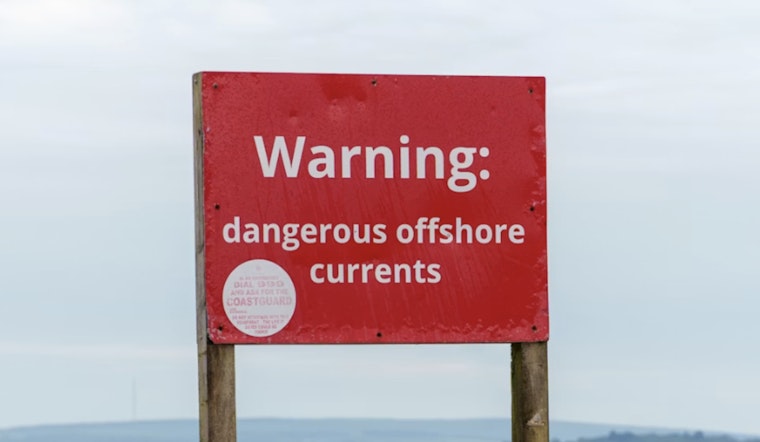
Memorial Day at the shore was supposed to be about first tans and boardwalk fries. Instead, it came with a blunt warning for anyone eyeing the surf along New York and New Jersey: stay out of the ocean unless you are in front of a lifeguard.
From the Rockaways and Coney Island to Long Island and down the Jersey Shore, officials cautioned that Atlantic-facing beaches were seeing dangerous conditions, with rip currents strong enough to turn a quick dip into a life-threatening emergency.
National Weather Service flags 'High' rip current risk
The Upton office of the National Weather Service put it plainly in its surf-zone forecast: a High Rip Current Risk was in effect through Monday evening for Atlantic beaches including Coney Island and Rockaway, with breakers running about 4 to 7 feet in some areas, according to the National Weather Service. Forecasters pointed to persistent east winds and long-period swells as the recipe for powerful rip currents and urged people to stay out of the surf unless it was absolutely necessary.
Red flags fly as local advisories go up
On the sand, lifeguards and local crews backed up the warning with red flags and no-nonsense advice. Towns along the coast told visitors to keep clear of the water in unguarded areas and to treat the high-risk designation as more than just fine print on a forecast.
PIX11 reported that officials singled out inexperienced swimmers in particular, urging them to stay on dry sand. Anyone who did decide to go in was told to stick close to lifeguard stands and bring some kind of flotation with them, just in case.
How to escape a rip current
Federal safety guidance is clear about one thing: trying to muscle your way straight back to shore against a rip current is a losing battle. Swimmers tire quickly, and that exhaustion can turn a bad situation into a fatal one.
The National Weather Service advises people caught in a rip to "relax and float" rather than fight the pull, and to swim parallel to the shoreline to slip out of the current if they are able, according to the National Weather Service. If escape is not possible, swimmers are told to face the beach and wave or call for help so lifeguards or bystanders can spot them quickly.
Beach season rules, lifeguard hours and where to check conditions
Memorial Day weekend also marked the official start of New York City beach season. Public beaches are now open, with lifeguards on duty daily from 10 a.m. to 6 p.m. Swimming is only permitted when lifeguards are present, according to NYC Parks.
Still, the dreary weather and high-risk surf kept crowds thinner than usual. Local TV coverage noted that many potential beachgoers watched the red flags and gray skies and decided to stay home, while coastal towns reminded anyone planning a trip to check the latest beach status and conditions before heading out, per FOX5 New York.
Rip currents are one of the most serious and misunderstood hazards on American beaches. They are a factor in tens of thousands of lifeguard rescues every year, and roughly 100 people nationwide die annually in rip currents, according to NOAA. Officials stressed that if you see someone in trouble, the safest move is to throw a flotation device or call 911 rather than charge into the water without any gear. On a day when the ocean is flexing its muscle, even strong swimmers are not guaranteed a second chance.



