

























































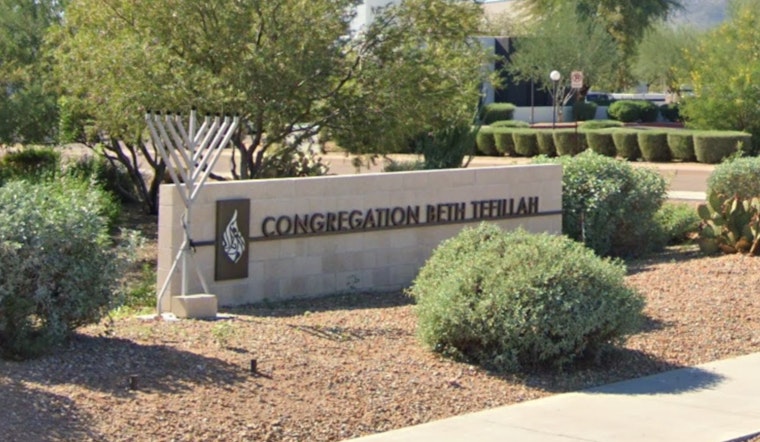
A doctored video that surfaced over the weekend is turning a Scottsdale crosswalk proposal into a political flashpoint, tying Vice Mayor Adam Kwasman to a $500,000 plan for a new crossing near Congregation Beth Tefillah on Shea Boulevard. The manipulated clip claims the city is poised to grant a pricey, special favor to Kwasman’s synagogue, alarming faith leaders and neighbors who say the framing is misleading and has supercharged an already tense debate over pedestrian-safety spending.
Deepfake Clip And Who Posted It
The short video bounced around local social platforms and, according to reporting by 12News, was posted by the activist group Protect Scottsdale. Using on-screen text and edited imagery, the clip claims the city would “give a special crosswalk” to Kwasman’s temple at an estimated cost of $500,000, language critics quickly pointed to as evidence of favoritism.
Kwasman, Clergy And Critics Respond
Kwasman told 12News at his law office that “it’s a very scary situation when you have deep fakes running around and portrayed as reality,” and he confirmed he had requested roughly $500,000 in city funding for a crosswalk project. Rabbi Pinchas Allouche, in an email reported by the station, urged congregants to attend the upcoming council meeting, writing that “unfortunately, there are those who are targeting our Jewish community and want to see the project cancelled.”
Critics tied to Protect Scottsdale and other residents counter that the controversy underscores their broader concerns about transparency and spending. One local critic, Susan Wood, told reporters she believes Kwasman has a pattern of labeling his opponents as antisemitic, a charge that has deepened the personal and political stakes around the proposal.
What The Proposed Crossing Would Look Like
City staff have described the proposal as a HAWK-style, pedestrian-activated crossing on busy Shea Boulevard, intended to help worshippers and other pedestrians safely reach Congregation Beth Tefillah and a neighboring church. The synagogue’s website lists its address as 6529 East Shea Blvd.
Pedestrian hybrid beacons, often called HAWK signals, stay dark until a pedestrian pushes a button, at which point drivers see a sequence of flashing and steady lights that are designed to improve yielding at midblock crossings. The Federal Highway Administration identifies this type of beacon as a countermeasure that can significantly reduce pedestrian crashes. For many Scottsdale residents, the fight now centers on how to balance potential safety gains against the cost and prioritization of limited city funds.
Deepfakes, Local Politics And The Law
The dust-up in Scottsdale mirrors a national trend in which AI-manipulated media is deployed to escalate local disputes and attack public figures, making it harder for communities to sort fact from fiction in fast-moving arguments. Arizona lawmakers have been debating how to respond. As Courthouse News reported, Governor Katie Hobbs vetoed a sweeping criminal measure targeting deepfakes but has approved narrower bills focused on disclosure rules and civil remedies.
National coverage and analysis, including reporting by WIRED, has highlighted how quickly deepfakes can inflame local tensions and how unevenly legal protections are developing across the country.
City officials and synagogue leaders say they plan to push for clarity at the next council session and are urging residents to rely on official information rather than reshare unverified video clips. The City of Scottsdale publishes council agendas and meeting materials on its website for anyone who wants to track the crosswalk proposal as it moves through staff review and public hearings.





