

























































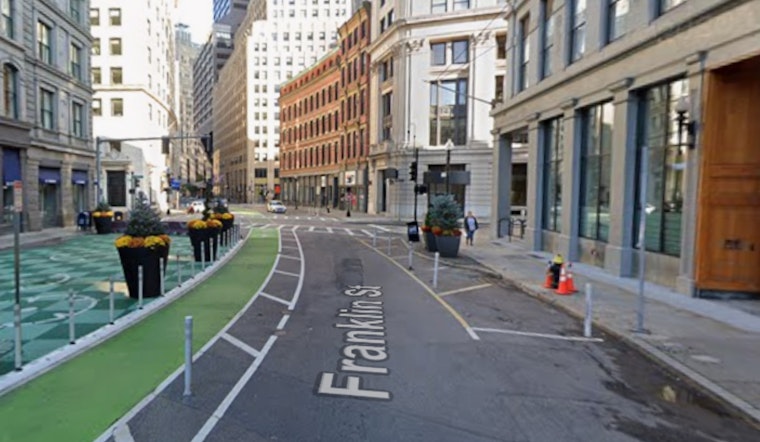
At 63 Franklin Street in Downtown Crossing, a five-story former office building has been turned into something very different from its buttoned-up past. Connor Schoen, 27, co-founder and CEO of Breaktime, has converted the property into a centralized resource hub for young adults experiencing homelessness. The building now offers showers, washers and dryers, a fully equipped kitchen and a closet stocked with interview-ready clothing. Breaktime says the space has already allowed the nonprofit to more than double the number of young people it can serve, pairing those basic needs with job training and multiyear case management aimed at stable housing.
Speaking with The Boston Globe, Schoen called the hub “a reimagination of how systems should work for young people” and said owning a centrally located building makes it possible to cluster services where they are easiest to reach. The Globe reports that Breaktime purchased the Downtown Crossing property in 2024 and that co-founder Tony Shu helped build the organization while the pair were still students.
What’s Inside The Hub
The third floor is set up as a drop-in space, with access to showers, laundry, donated food and private rooms where caseworkers can meet with participants one-on-one. The fourth and fifth floors hold job-training classrooms along with Breaktime staff offices. A clinic is slated to operate on the second floor, with Boston Health Care for the Homeless providing primary care and counseling on site, according to Axios Boston.
A Work-First Approach
Breaktime’s model starts with a paycheck. The nonprofit hires young people onto its own payroll and places them in three-month paid roles with employer partners, paying associates 20 dollars an hour while those partners reimburse roughly half the wage. After that initial stint, Breaktime continues to follow participants with three years of case management and modest cash support. The group says it pays 100 dollars a month to young people who stay in touch with a case manager, a structure described on Breaktime.
How The Nonprofit Paid For It
Breaktime paid 6.3 million dollars for 63 Franklin Street, according to The Boston Globe, a purchase price the organization says became possible in a softened commercial real estate market. Eastern Bank’s community development lending team structured tax-exempt bond financing and bridge loans to cover both the acquisition and renovations, so Breaktime would not need to dip into operating funds, a financing model the bank points to as one that could be replicated by other nonprofits.
Breaktime reports that in 2024, 78 percent of its alumni were in stable housing and 89 percent were employed or enrolled in school. The organization says the Franklin Street hub will open in phases through 2027 as renovations are completed. Supporters argue that owning its own building gives Breaktime the flexibility to organize services around young people’s needs, while advocates caution that a larger supply of housing and sustained public funding will still be required to shift broader trends in youth homelessness.





