

























































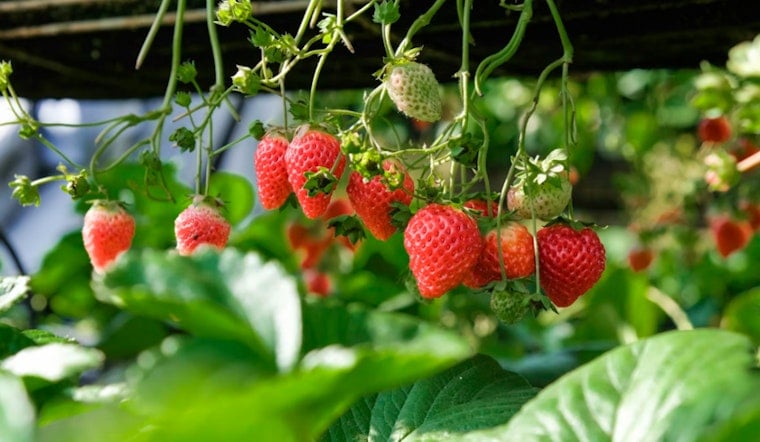
Plant City strawberry growers are staring down a winter they would rather skip. University of Florida researchers and local farm advisers are warning that a likely El Niño could turn the next season wetter and more disease prone, a rough combo for a crop that prefers cool and dry over damp and steamy. A new analysis says humid, cooler winter spells favor Botrytis, the gray mold that can rot entire harvests, and may force more fungicide applications during key months. If the forecasts hold, growers could be looking at higher input costs and tighter margins just to keep berries in marketable shape.
New UF study ties El Niño to greater Botrytis risk
In the new work, researchers modeled Botrytis infection risk across Florida using 74 years of climate data from 1950 to 2024 and found that during El Niño years the risk in Hillsborough, Polk, Manatee and Hardee counties was above average about 70% of the time, according to Agricultural and Forest Meteorology. The paper also estimated that growers in Hillsborough who follow alerts from the Strawberry Advisory System saw fungicide use rise by as much as 50% in some seasons. Those extra applications add labor and product costs right in the heart of the November to April strawberry season, chipping away at profits even when yields hold.
Local presentation and the forecast
Vinicius Cerbaro, a UF post doctoral researcher, walked Plant City growers through the findings at the Florida AgriTech conference in Plant City on May 6. The event is hosted by the Florida Strawberry Growers Association (Florida AgriTech). Cerbaro told local reporters there is "about a 60% chance" El Niño will emerge between May and July and persist through the end of the year, as reported by the Tampa Free Press.
Why El Niño matters for strawberries
El Niño years tend to bring above average rainfall and slightly cooler temperatures to Florida during the winter months, increasing leaf wetness and humidity. Those are exactly the conditions Botrytis fungi thrive in, the UF modeling found. NOAA's Climate Prediction Center outlook likewise shows a likely transition to El Niño in the May to July window, which would keep those wetter conditions in play through much of 2026's growing cycle (NOAA CPC).
Strawberry Advisory System and timing sprays
To fight disease while trimming unnecessary sprays, UF/IFAS developed the Strawberry Advisory System (SAS), a web and mobile decision tool that uses leaf wetness and temperature data to time fungicide applications for Botrytis and anthracnose. The SAS is designed to tell growers when weather conditions are favorable for disease so they can spray based on risk rather than on a fixed calendar, according to UF/IFAS Extension. UF teams are also testing AI tools and improved leaf wetness detection to sharpen those alerts and reduce false positives, as outlined in recent coverage of the research in the UF/IFAS blog.
Economic stakes for Plant City growers
Florida leads the nation in winter strawberry production, and the state season runs from November through April, with west central counties around Plant City producing a large share of the crop. The industry is commonly estimated to be worth roughly $500 million a year at the farm gate, so any spike in disease or spray costs could hit a substantial local economy, according to the Tampa Free Press. For many farms that kind of margin squeeze can translate into changing variety choices, shifting planting dates or simply absorbing higher labor and chemical bills.
What to watch next
Growers and advisers will be watching NOAA's monthly ENSO diagnostics and model runs through the summer, as the Climate Prediction Center updates its probabilities when ocean and wind patterns evolve and will publish new diagnostics in the coming weeks. In the meantime UF researchers say the study's risk maps and the Strawberry Advisory System could provide some advance warning so growers can adjust spray timing, irrigation and variety plans to blunt the worst impacts of a soggy El Niño season.





