

























































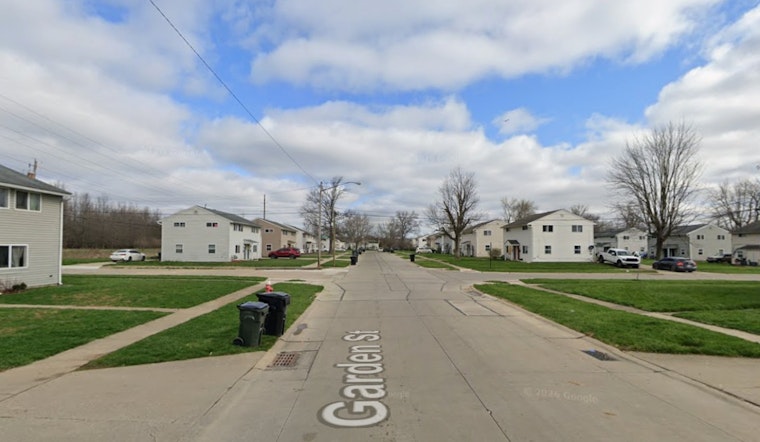
Police say a 36-year-old Elyria man is facing a felony OVI charge after a Garden Street crash that snapped a telephone pole and sent the driver to the hospital. The wreck happened last Monday, and according to investigators, the man refused chemical testing. With multiple prior OVI convictions already on his record, prosecutors say the case now qualifies for Ohio’s repeat-offender enhancement, putting tougher penalties on the table and renewing local debate over how the system handles chronic impaired drivers.
Crash and police report
Officers were called to the crash around 3:30 p.m. and found an unoccupied, heavily damaged Hyundai Sonata next to a downed telephone pole. A nearby resident told police they had just seen the driver climb out of the wrecked car. Officers later found the man in a driveway in the 1100 block of Garden Street, and Lifecare paramedics took him to University Hospitals Elyria Medical Center for treatment, as reported by Morning Journal.
The police report notes that the man had a red substance believed to be blood on his shirt, appeared to be bleeding near his right eye, and was holding a bottle of beer when officers approached him. The report also lists several prior OVI convictions, which is what elevates the current case beyond a routine misdemeanor impaired-driving stop.
Why this charge is elevated
Under Ohio law, most OVI offenses start as misdemeanors, but they increase in severity when a driver racks up multiple convictions within the statutory “lookback” period. The main OVI statute and related provisions on repeat-offender specifications and implied consent (R.C. 4511.19 and 4511.191) allow prosecutors to charge a fourth-degree felony if a driver has five prior OVI convictions on record. A refusal to submit to chemical testing also triggers separate administrative penalties tied to implied consent.
That legal setup is why the list of past cases in the police report matters so much here: those prior convictions can transform the latest stop into a felony-level OVI. For the exact legal language, see Ohio Revised Code section 4511.19.
Repeat offenders in Elyria
Elyria has been wrestling with repeat OVI cases lately. Earlier this month, local coverage detailed a separate arrest where officers accused a driver of being on his ninth OVI, a number that grabbed plenty of attention and underscored how some motorists keep cycling through the system. Those kinds of cases have fueled a running conversation in the city about whether tougher punishment, expanded treatment, closer monitoring, or some mix of all three is the smartest way to curb chronic impaired driving, a debate highlighted in ninth OVI case coverage.
Charges and what’s next
Police identified the suspect as 36-year-old Mario L. Newson. He has been charged with felony OVI, OVI refusal, driving under suspension, and failure to control. Officers met with Newson at the hospital to issue the citations and set a mandatory court date, according to Morning Journal.
The Lorain County prosecutor’s office will now review the case and decide whether to formally pursue the repeat-offender specification in court. If the felony specification holds, Newson would be looking at the enhanced penalties that come with a felony OVI conviction, on top of any administrative fallout from the alleged refusal.
Legal context and public safety
Ohio’s tiered OVI system is built to ratchet up consequences for repeat offenders, with the goal of keeping drivers who chronically drink or use drugs behind the wheel off the road. But advocates, defense attorneys, and public-safety officials often differ on what actually works best to protect the public: longer sentences, more intensive treatment, stricter monitoring, or some combination.
As Newson’s case moves forward, judges and prosecutors will be weighing his prior convictions, the alleged refusal to test, and the injuries and property damage from the Garden Street crash under the same statutory framework described above. The relevant law remains available in the Ohio Revised Code.




