

























































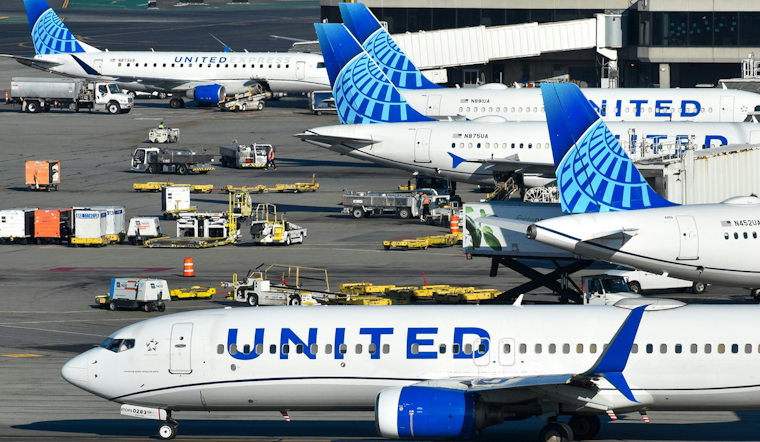
Low clouds rolled in over the Bay Area on Friday and turned San Francisco International Airport into a slow-motion mess, as a Federal Aviation Administration ground delay program threw schedules off and left hundreds of flights running late. The disruptions were expected to drag through the day, with delays averaging about an hour to an hour and a half during peak times. Travelers were hit with longer connections and upstream hold times at departure airports while airlines and air-traffic controllers scrambled to reshuffle plans.
FAA ground delay program and what it covers
Per the FAA advisory, the ground delay program at SFO covers flights from across the contiguous United States and selected Canadian airports and caps arrivals at roughly 36 flights per hour. The advisory cites weather, specifically "low ceilings," as the culprit and instructs airlines to assign EDCTs (expect departure clearance times) so aircraft are held at their origin airports instead of stacking up in arrival patterns over SFO. That federal traffic-management order is the tool controllers use to keep operations safe when the airport has to run at reduced capacity.
Why low clouds choke SFO
Those low cloud ceilings matter at SFO because they force controllers to widen the spacing between aircraft and often block simultaneous parallel approaches on the airport’s closely spaced runways. As noted on SFO's Weather Impacts page, the airport has been operating under an FAA traffic-management plan that shifts with weather and runway configurations. Operational studies going back decades show that the Bay’s marine stratus can slash arrival capacity by roughly half during persistent low-ceiling events, and that lost capacity is what turns a routine foggy morning into a system-wide tangle of delays. A summary of cloud-forecast and operations work at SFO by researchers at MIT Lincoln Laboratory has documented that pattern for years.
Delays piling up across the Bay
An airport spokesperson said more than 200 flights were already delayed by 11 a.m., and flight-tracking site FlightAware showed average delays of about 75 minutes at SFO, according to reporting by NBC Bay Area. United, Southwest and SkyWest were among the carriers seeing the heaviest disruption, and smaller knock-on delays started popping up at Oakland and San Jose as aircraft and crews were shuffled around to match the tighter arrival rate. Airlines warned passengers to check their itineraries before heading to the airport because many departures are being held at origin to comply with the FAA’s EDCTs.
Runway work is tightening margins
The timing of the weather made things worse. SFO has closed one of its primary runways this spring for months-long repaving and taxiway work, which has pushed more traffic onto fewer runways and left less slack to absorb weather-related slowdowns. The San Francisco Chronicle has reported on the closure and how it has reduced the airport’s ability to bounce back quickly when something goes sideways. That combination of construction plus low ceilings turns even a short spell of marine stratus into hours of delays across the system.
What travelers should do
If you are flying to or from SFO today, check your airline app and SFO's delay tracker before you leave and build in extra time for connections. SFO's operations guidance and FAA status pages both urge passengers to confirm itineraries directly with their airlines, since many departures are being shifted at origin to meet SFO’s arrival limits. For major disruptions, airlines typically post rebooking and refund policies on their websites, and travelers with tight connections should reach out to their carrier as soon as possible to explore options.




