

























































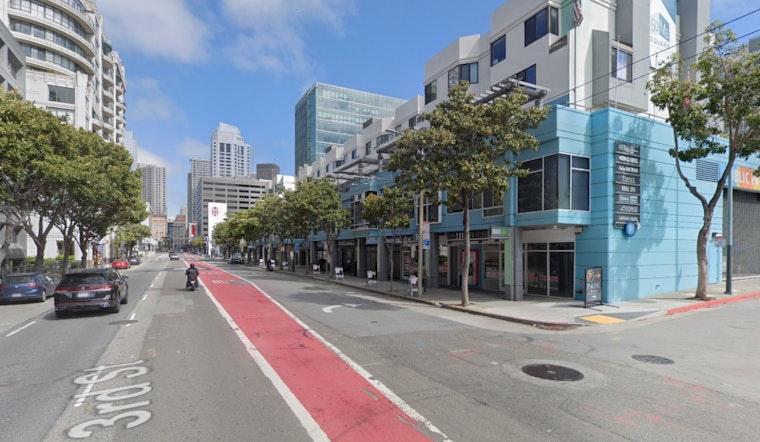
Tomorrow, a nondescript parking lot at Third and Harrison will briefly turn into constitutional ground zero, as San Francisco marks the 140th anniversary of Yick Wo v. Hopkins at the site where a Chinese laundry once stood. Preservation advocates, Chinatown organizations and city officials are gathering to honor the local case that helped give real teeth to the Fourteenth Amendment’s promise of equal protection.
Commemoration Planned At 349 Third Street
According to San Francisco Heritage, the city’s preservation nonprofit will join the Chinese Historical Society of America and partner groups for a short public ceremony at 349 Third Street tomorrow from 4:00 to 4:30 PM. The program will feature brief remarks from SF Heritage, CHSA and elected officials, and is designed as the kickoff for a push to install permanent interpretive elements at the site, potentially ranging from a sidewalk marker to a mural.
What The Supreme Court Decided
On May 10, 1886, the U.S. Supreme Court issued a unanimous opinion holding that a law enforced in a racially discriminatory way violates the Fourteenth Amendment’s equal protection guarantee. The ruling clarified that constitutional protections apply to “persons” in the United States regardless of citizenship status and that the way a law is administered, not just its text, can render it unconstitutional. As Cornell Law School's LII notes, the decision has been cited repeatedly in later civil rights cases.
From A $10 Fine To The Nation's Highest Court
Lee Yick and Wo Lee were each fined $10 by Sheriff Peter Hopkins for running laundries in wooden buildings. They refused to pay, landed in jail and set in motion the legal fight that would reach the Supreme Court. Historical accounts describe how San Francisco’s permit system routinely favored white-owned laundries while denying permits to many Chinese proprietors, a pattern local historians say has faded from public memory until now. For more background, see coverage by KQED and a prior Hoodline feature on this racist laundry law fight.
Parking Lot Today, Tower Proposal Tomorrow
The former laundry address sits at the corner of Third and Harrison and is now an open parking lot. The parcel has been acquired by Strada Investment Group and is the focus of a high-rise proposal. Strada’s project page describes a 395 Third Street development of roughly 524 housing units, and local planning coverage reports that the project secured entitlement approvals in 2023. Community groups say they have contacted the developer about baking permanent interpretive features into the project as it advances.
City Officials Back Memorial Plans
Supervisor Matt Dorsey, whose district covers the block, is among the elected officials supporting the commemoration and plans to introduce a resolution recognizing the site’s importance, according to reporting. Organizers argue that a visible marker would help fill a long-standing gap in public recognition and highlight Chinese American legal resistance in the city’s streetscape. The San Francisco Standard notes the parking lot’s ownership and describes how Dorsey’s office has been in touch with the developer as part of conversations about a permanent memorial.
Why Yick Wo Still Matters
Legal scholars and advocates continue to treat Yick Wo as a bedrock precedent for arguments that facially neutral laws can be unconstitutional if applied with discriminatory intent, a principle that still surfaces in fights over administrative discretion and immigration enforcement. For organizers and historians in San Francisco, the anniversary event is at once a local preservation campaign and a reminder that immigrant communities played a central role in shaping national civil rights doctrine. The San Francisco Heritage release frames tomorrow’s gathering as the beginning of a longer-term effort to permanently mark the site.





