

























































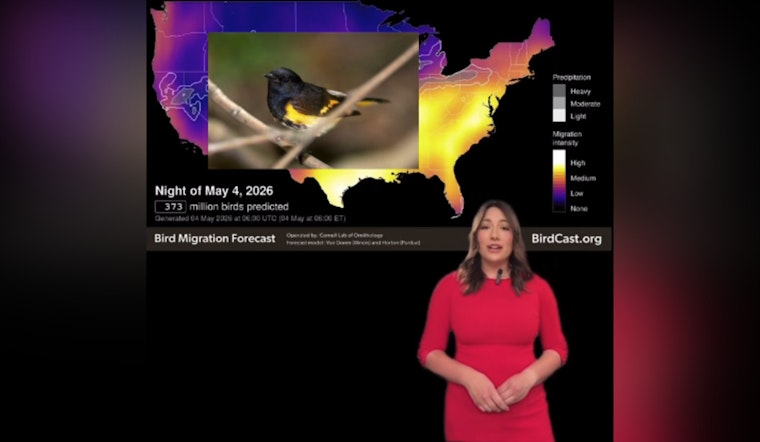
Missouri’s “Feather Weather” forecast is not exactly subtle: hundreds of millions of birds are on the move tonight, and conservation groups are urging cities to cut the glow. In a short social post Monday evening, the Missouri Department of Conservation framed the staggering numbers as an urgent conservation nudge. In St. Louis, that means the Gateway Arch will stay unlit for May as part of a plan to reduce collisions and keep migrating birds on course.
Where the forecast comes from
Those eye-popping tallies come from continental migration models that turn radar and weather data into nightly bird-traffic estimates. According to BirdCast, the maps draw on decades of radar observations and forecast models to predict migration intensity, and the Missouri Department of Conservation shared specific nightly totals, including a claim that roughly 373 million birds could be aloft across the U.S. tonight, in a Facebook reel.
Why lights matter
Artificial light at night acts like an ecological magnet, pulling migrants into brightly lit cityscapes where collisions and exhaustion spike. A broad analysis published in Nature Communications found skyglow to be a top predictor of where migrating birds stop, which helps explain why conservation groups zero in on reducing night lighting during migration peaks. Regional campaigns such as Lights Out Heartland promote coordinated darkening during those critical windows.
Gateway Arch and local action
Gateway Arch National Park has said it will not illuminate the monument’s exterior through May, a move officials say reduces the risk of disorienting night-flying birds and follows a practice the park has used during migration for years. KFVS reports the monument will return to normal lighting in early June, and local advocates such as DarkSky Missouri say the Arch shows how high-profile landmarks and ordinary buildings alike can reduce collision risk by going dark on peak nights.
How to help tonight
Simple steps make a measurable difference: turn off nonessential lights from dusk to dawn, cover or dim lobby and atrium lighting, and ask property managers to extinguish decorative exterior fixtures when forecasts flag heavy migration. You can sign up for migration alerts and nightly forecasts at BirdCast, and log any observations to eBird so scientists can track where migrants are stopping and refine future forecasts.




