

























































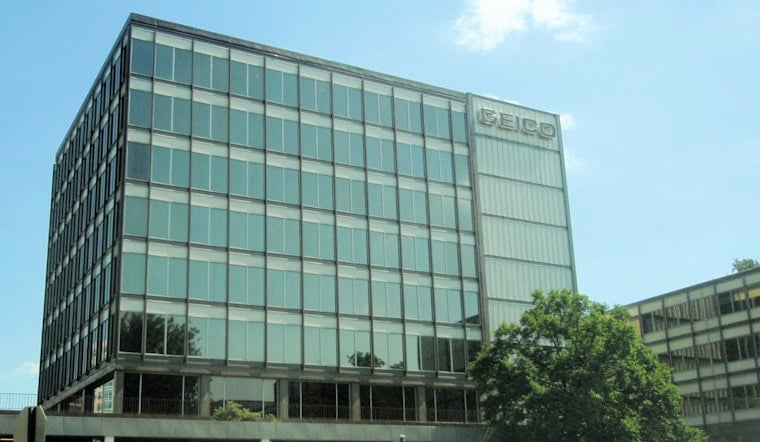
GEICO has hauled a newly formed New York medical-supply company into federal court, accusing it of churning out more than $1 million in eyebrow-raising no-fault insurance claims in just a few months.
In a lawsuit filed May 14, 2026, in the Eastern District of New York, the insurer targets Ilak OS, Inc. (doing business as Il Ak Ortho Supply) and its owner, Ilyas Aksabaev. GEICO says the pair ran up over $1 million in no-fault billing in roughly two and a half months, and it wants a judge to let it claw back more than $210,000 it has already paid while declaring it owes nothing on about $740,000 in still-pending claims.
According to the complaint, almost the entire tab comes from just four types of durable medical equipment, which together made up more than 99% of the charges: pneumatic compression devices, wearable PEMF units, ultrasound therapy devices and powered pressure-reducing air mattresses. The filing lays out per-claim prices of roughly $2,826.70 for E0675 pneumatic compression devices, $3,300 for E0747 wearable PEMF billed as an osteogenesis stimulator, $2,700 for E0760 ultrasound stimulators and $3,961.75 for E0277 powered air mattresses. GEICO says those prices are wildly out of scale for the routine soft-tissue crash injuries described in the underlying no-fault cases.
State corporate records, as reflected in BizProfile, show Ilak OS, Inc. was incorporated on April 8, 2025, and the complaint contends that heavy billing began soon after. BizProfile also reported the filing.
Codes, prices and federal rules
At the center of the dispute are HCPCS codes that come with very specific rules. Osteogenesis-stimulator codes like E0747 and E0760 are supposed to be used only in narrow, well-documented situations, such as a long-bone nonunion proved by two radiographs taken at least 90 days apart. That threshold is what CMS and medical reviewers rely on to decide whether the devices are medically necessary.
That federal guidance has already put osteogenesis and other non-fee-schedule codes under a microscope, which is why insurers tend to flag high-priced DME when it is billed for patients who have minor sprains rather than fractures. For background, see CMS.
Alleged referral networks and forged scripts
GEICO says this was not just aggressive billing, but part of a referral setup. The suit alleges that Aksabaev made deals with clinic "controllers" who funneled prescriptions to Il Ak Ortho Supply in exchange for kickbacks.
Roughly two-thirds of the disputed billing, GEICO claims, came from providers tied to South Bronx Medical Rehabilitation P.C., including John McGee, DO; Stella Amanze, PA; and Adelina Fazilov, NP. The complaint, according to Insurance Business, includes sample prescriptions that the insurer says bear photocopied or forged signatures and nearly identical instructions that show up across different patients.
GEICO also alleges that the supplier often did not dispense the devices it actually billed for. Instead, according to the complaint, Il Ak Ortho Supply charged osteogenesis-stimulator rates for cheaper portable stimulation units and billed for full powered air mattresses when it was really providing mattress pads.
Why New York's rules matter
New York's no-fault system pays basic economic loss up to $50,000 per person, which means a flurry of high-dollar DME claims can quickly drain an injured driver's personal injury protection benefits. That in turn sets up fights over who gets paid and who is left holding the bag.
The state tries to keep a lid on this with a DME fee schedule and related rules (12 NYCRR § 442.2) that cap what providers can charge for many durable medical items. On top of that, Public Health Law § 238-d requires clinicians to tell patients about certain financial referral relationships, which is meant to shine some light on who is steering business where.
For more on these limits, see the no-fault overview from the New York Department of Financial Services at DFS, the DME fee-schedule rule at Cornell Law School and New York's Public Health Law § 238-d on Justia.
Why this matters and what to watch
This case is part of a broader campaign by GEICO to crack down on what it says are organized no-fault billing schemes. The insurer has recently filed a run of civil suits that target alleged no-fault networks, sometimes adding RICO claims when it believes it can show coordinated kickbacks and fraud.
Industry and legal coverage has noted that in some of those suits, insurers seek treble damages and attorneys' fees when they frame the conduct as racketeering or fraud, which is the legal context hanging over this latest filing. For a sense of how similar cases have been structured, see coverage of other GEICO RICO complaints in Mealey's.
For now, the allegations in the Il Ak Ortho Supply case are just that. The claims have not been proven, and they will have to survive motions and discovery in federal court before any liability or damages are decided.





