

























































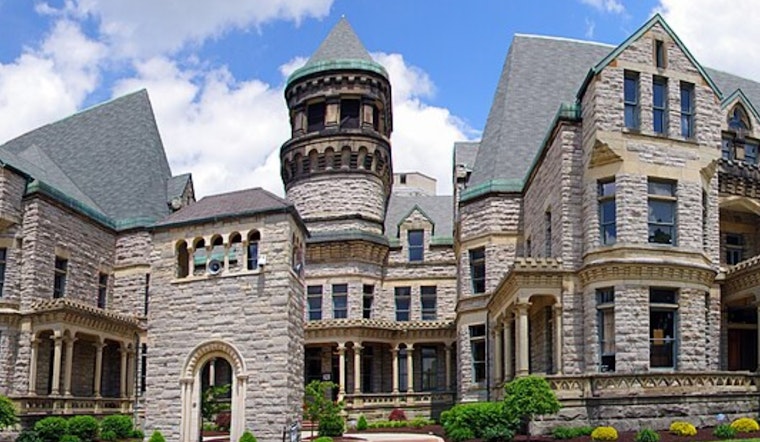
The hulking limestone fortress on Mansfield's edge has gone from locking people up to luring them in. Once a working prison, the Ohio State Reformatory now serves as a museum, a magnet for ghost hunters, and a summertime staging ground for major events. This weekend, it hosts ParaPsyCon, and by July, the property will morph again for the Inkcarceration music and tattoo festival.
Designed by Cleveland architect Levi Scofield and opened to its first prisoners in 1896, the Reformatory's ornate stonework reflected an early faith in reform over punishment, according to the Mansfield Reformatory Preservation Society. A class-action lawsuit and resulting consent decree ultimately forced the state to stop operating the aging facility, and the prison was effectively taken out of service by 1990, according to court records at the Civil Rights Litigation Clearinghouse. Local advocates formally organized as a preservation group in 1995 and later negotiated to keep the building standing, per research from Destination Mansfield.
Events Run The Grounds This Summer
ParaPsyCon 7, a weekend convention for paranormal investigators, psychics, and other fringe researchers, runs May 15–17 at the Reformatory, according to the ParaPsyCon schedule. Tours and paranormal programming fill the calendar through mid-July, as reported by Axios Cleveland. The Inkcarceration Music & Tattoo Festival is set for July 17–19, 2026, per the festival's official site, Inkcarceration.
Shawshank's Long Shadow And Big-Tent Festivals
Frank Darabont's crew used the Reformatory as Shawshank, and the film's eventual cult status helped pull the building back from the brink of demolition, research from Destination Mansfield shows. The prison now anchors a Shawshank Trail and hosts dozens of film-focused tours, while big events turn the front lawn into a full festival ground. Inkcarceration drew about 90,000 people in 2025, according to reporting in Richland Source. Organizers say that the mix of film tourism and large-scale festivals has become a meaningful economic boost for the region.
How A Court Case Rewrote The Building's Fate
The Reformatory's modern story runs straight through federal court. A class-action lawsuit filed in the late 1970s led to a consent decree that put limits on overcrowding, segregation, and sanitation, and the resulting timetable helped push the prison toward closure, according to court records at the Civil Rights Litigation Clearinghouse. Chief Judge Frank Battisti's 1983 order imposed deadlines and injunctions that the state struggled to meet, and the cost of compliance helped bring the institution to an end by 1990. Those public records remain the clearest account of why the Reformatory stopped operating as a prison.
For now, the Reformatory's immediate future is mapped out in events. Passes for Inkcarceration are available on the festival's official site, and Axios Cleveland notes that daytime tours run almost daily through mid-July. For visitors planning a pilgrimage, whether for film history, a ghost hunt, or a weekend of ink and metal, booking ahead is the safest bet.





