

























































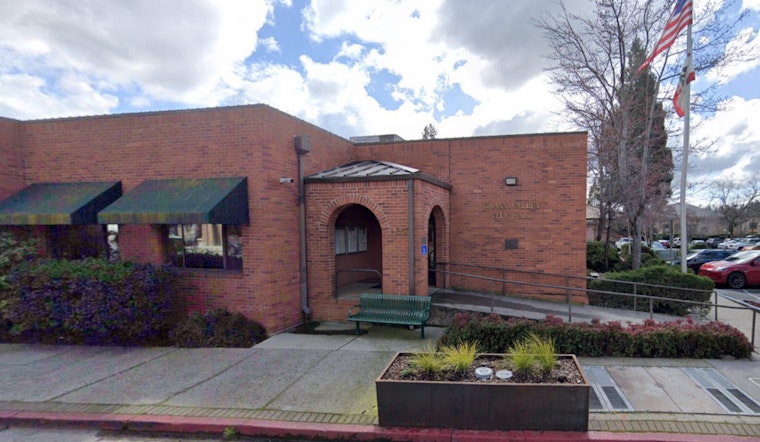
Grass Valley city leaders got an earful at a Friday night council meeting on May 29, 2026, as residents and privacy advocates lined up to demand the city walk away from its contract with Flock Safety, the company behind the automated license-plate readers posted around town. Supporters of a local watchdog group said audit logs show millions of searches and thousands of entries with blank or vague justifications, raising new questions about oversight and who else may be looking at the data. At the same time, city staff moved the preliminary FY 2026–27 budget forward and held the line that the cameras remain an important investigative tool.
Public pressure builds at council
Roughly 15 speakers used the public-comment period to urge the council to kill the Flock agreement and tighten the rules on who can run plate searches and for what reasons. According to The Union, local organizer Lindsey Nielsen, who identified herself as the founder of a "de-flock" working group, told council members that records show the Grass Valley Police Department shared data with federal immigration authorities and pressed the city to end the contract next year. Other speakers said they had pursued public-records requests for audit logs and discovered searches attributed to outside organizations.
How the cameras were rolled out
The city signed on with Flock in September 2021, and staff say the fixed-point readers went live in January 2022. A staff packet from July 2023 recommended a five-year extension and a broader network of cameras, describing them as positioned at key entry and exit routes to deliver timely alerts to officers. The same packet outlines a 30-day retention policy for license-plate data and explains how hot-list hits are automatically pushed to patrol devices, according to City of Grass Valley meeting materials.
Watchdog audit finds millions of searches
The de-flock group told the council that documents it obtained show about 3.9 million individuals were searched using Grass Valley’s cameras over an 18-month span, with nearly 24,000 searches logged as having "no legitimate stated purpose." As reported by The Union, the group said it counted 31,996 entries where the justification field was missing or filled with placeholders, more than 7,000 entries with the reason field left blank, and searches tied to 357 outside organizations. More than 1,000 of those queries, the group said, explicitly listed immigration enforcement as the purpose. Advocates argued that the numbers point to a breakdown in required oversight and auditing practices.
Police defend the program
City and police officials responded that the Flock system has delivered concrete results. Local law-enforcement leaders have cited multiple stolen-vehicle recoveries and investigations that leaned on ALPR alerts, along with cases in which the cameras helped identify suspects accused of tampering with ATM hardware. Officials said any changes to policy need to balance civil-liberties concerns with what they describe as the system’s role in deterring crime and helping officers solve cases.
Legal context and oversight
Under California law, agencies that deploy automated license-plate readers must adopt written usage and privacy policies that spell out permitted purposes and auditing procedures. Those requirements trace back to SB 34 and related statutes that govern how ALPR data can be collected, used, and shared. State lawmakers are now debating newer proposals that would layer on statewide audits, stricter retention limits, and clearer rules for hot lists and data sharing. For more on the legal framework, see California Legislative Information and a recent Senate committee hearing transcript via CalMatters.
What comes next
The council unanimously signed off on the FY 2026–27 preliminary budget and scheduled a public hearing for final adoption on June 9, 2026, leaving any decision on the Flock contract to an early-June window, according to the city agenda packet. GVPD Deputy Chief Steve Johnson has set a community meeting for June 10 at the Love Building in Condon Park to field questions from residents and explain department practices around the system. Council members said they will weigh the watchdog group’s findings, state law, and the latest round of public comment before deciding whether to cancel, modify, or renew the city’s agreement with Flock.
The Grass Valley fight is the latest round in a broader California debate over how far cities should go with modern surveillance tools and how tightly they should be reined in. In the coming weeks, the city will have to decide whether the investigative gains officials tout are worth the oversight gaps that activists say the audit laid bare.





