

























































An unfinished, seven-foot robot with four legs, two arms and a goat-like head has become Northern California’s latest unlikely internet sensation. Its creator is still working toward the first major milestone—getting the machine to stand—but online viewers have already pushed the project into the viral stratosphere.
The robot, called Three-Halves, is being built at night in an Auburn garage by an inventor identified as Beau. As KCRA 3 News reports, the centaur-style machine is designed with a horse-like body, a horned goat head and two arms capable of handling tools.
Three-Halves Is Built For The Dangerous Parts Of Forestry
Beau is developing Three-Halves as a proof of concept, with possible uses in wildfire zones, disaster sites and forestry work. The robot could eventually help clear debris from power lines or cut dead trees, keeping human workers farther away from falling branches and other hazards.
The design favors four legs because they can provide dynamic stability without the bulk of wheels or tracks, according to the project’s Satyress website. The robot is expected to use a gaming controller, not artificial intelligence, and Beau says it will not be operated from a faraway command center.
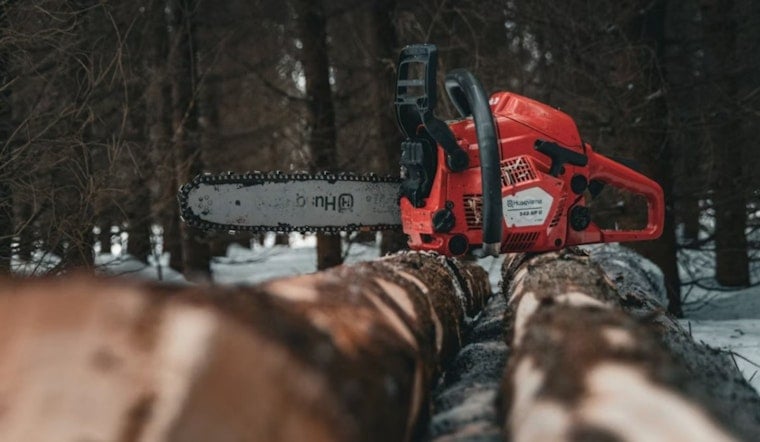
That practical mission is competing with a much stranger visual: a giant goat-headed machine that looks like it wandered out of a mythological forest and into a home workshop. Three-Halves can already use a chainsaw in demonstrations, though substantial development remains before it becomes a working field robot.
The Internet Found The Project Before It Was Ready
Before the frenzy, the Satyress website reportedly received only about 30 visits a day. Posts about Three-Halves generated millions of new views this week, prompting Beau to increase the site’s server bandwidth to handle the sudden traffic, KCRA reported.
Beau had been documenting and protecting the design online since 2024, when the project was still a slow, careful build shared with friends and developed without investors. The site also includes instructions for disabling the robot with a gun or knife—a jarring detail, but one that underscores the project’s focus on operating around dangerous work and unpredictable environments.
For now, Three-Halves is less a finished product than a very ambitious garage experiment with an unexpectedly large audience. Beau hopes to have it standing by the end of 2026, meaning the internet may get to watch the machine’s next big moment in real time.





