

























































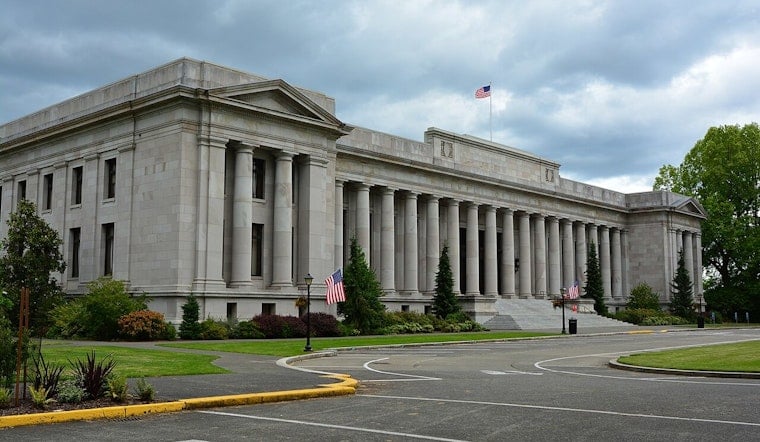
The future of the massive Horse Heaven wind and solar project outside the Tri-Cities is now in the hands of the Washington Supreme Court. Next month, the justices will decide whether to undo the state permit for Scout Clean Energy's Horse Heaven Hills development after challenges from the Yakama Nation, Benton County and local group Tri-Cities C.A.R.E.S., who argue the approval short-changed tribal cultural sites and farmland. The outcome could reset how Washington balances aggressive climate goals with local and tribal protections.
The court has set consolidated oral arguments for June 11 in Olympia, listing Tri-Cities C.A.R.E.S., Benton County and the Yakama Nation as petitioners and allowing roughly 30 minutes per side, according to the Washington Supreme Court. The petitioners are asking the court to undo the permit outright or send it back to regulators for another round.
Project by the numbers
Scout first applied on Feb. 8, 2021, for a Site Certification Agreement. The project's final SCA authorizes up to 1,150 megawatts of nameplate capacity, as many as 222 wind turbines and up to three solar arrays on roughly 5,447 acres within a lease boundary of about 72,428 acres, according to the Energy Facility Site Certification Agreement. The SCA also spells out mitigation for raptor nests, habitat compensation and a dryland farming management plan meant to preserve harvest windows for participating wheat farmers.
How the governor stepped in
The Energy Facility Site Evaluation Council, or EFSEC, initially recommended a smaller build to limit impacts to views, wildlife and tribal cultural resources. Then-Gov. Jay Inslee remanded the proposal to the council and ultimately signed a revised SCA, a move petitioners argue went beyond what state law allows a governor to do, as reported by The Associated Press.
Why tribes and the county sued
The Yakama Nation, Benton County and Tri-Cities C.A.R.E.S. responded by filing petitions asking the state Supreme Court to undo or remand the permit. In court papers, they contend that the governor's directive and EFSEC's later actions violated state siting and land use laws and sidelined meaningful tribal consultation. Tri-Cities C.A.R.E.S. lays out the group's legal objections and a timeline of the dispute, and the cases have been consolidated for review by the high court.
Amici and industry warnings
The case has drawn a crowd of outside voices. Filing records show support briefs from groups including Renewable Northwest and the Northwest and Intermountain Power Producers Coalition urging the justices to let the project proceed, while the Affiliated Tribes of Northwest Indians filed a separate amicus asking the court to take cultural harms seriously. The Washington Courts briefs index lists the range of amici, and the Affiliated Tribes' website notes the organization represents dozens of tribal governments across the Northwest, a sign that tribal leaders well beyond the Yakama Nation are watching what happens.
Legal stakes
The justices have several options. They could send the matter back to EFSEC for fresh consideration, strike specific pieces of the Site Certification Agreement or uphold the governor's approval. Each path would carry different consequences for how future energy siting calls get made in Washington.
Local reporting and legal filings show petitioners pressing a mix of statutory claims about executive authority, open meeting rules and land use protections, while project backers warn that tossing the permit would drag out the state's renewable energy buildout, as outlined in recent coverage by Capital Press.
Local stakes
EFSEC's record and hearings include testimony from participating landowners who say turbines and new access roads will let them keep dryland wheat operations running while adding lease income, and the council's findings note those financial benefits. Developers and boosters have pointed to roughly 1,000 construction jobs and more than $250 million in local tax revenues over the life of the project as reasons to move forward, according to the Tri-Cities Area Journal of Business. Even so, construction is effectively on ice while the Supreme Court sorts through the legal record.
Oral argument is set for June 11, and a decision could take months. Whatever the timeline, the ruling will reach far beyond Benton County, shaping how Washington sites large renewable projects and consults with tribes for years to come.





