

























































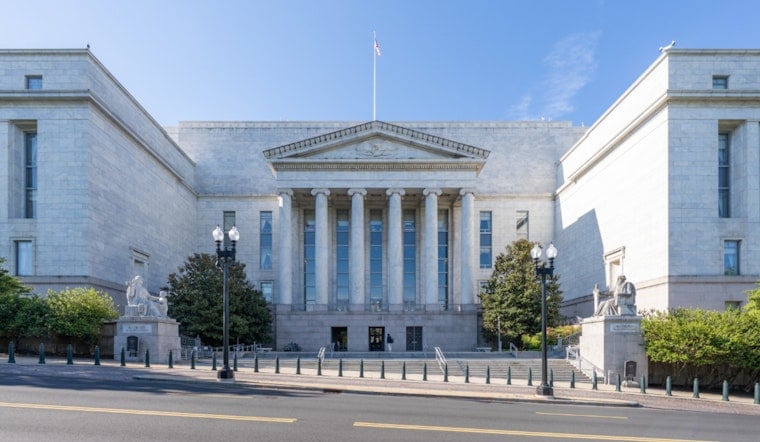
House Judiciary Committee Republicans turned up the heat on Boston officials on Wednesday, ordering them to turn over a wide range of records tied to the city’s so-called sanctuary policies.
Letters signed by Chairman Jim Jordan and immigration subcommittee Chair Tom McClintock went out to Boston Police Commissioner Michael Cox, Suffolk County District Attorney Kevin Hayden and Sheriff Steven Tompkins, giving all three offices a tight deadline to respond. The committee is seeking information on how Boston handles ICE detainer requests, as well as prosecutorial guidance, training materials and bond rules that intersect with immigration enforcement.
What the committee requested
The committee sent one letter to each office, all asking for a sweeping set of records. The requests include communications with federal immigration authorities, the number of ICE detainers received and declined, internal training materials, bond policies and examples of cases where immigration collateral consequences were taken into account.
The letter to Suffolk County District Attorney Kevin Hayden, for instance, lists seven categories of records covering January 1, 2022, to the present and sets a firm deadline of 5 p.m. on June 10 for production. As posted on the House Judiciary Committee website, the requests are framed as oversight intended “to inform potential legislative reforms,” and the full Hayden letter is available in the committee document.
Boston's detainer record
Boston has already been a flashpoint in the detainer fight. Police Commissioner Michael Cox told city officials that his department received 57 ICE detainer requests in 2025 and did not honor any of them. That figure appeared in Cox’s annual report under the Boston Trust Act and was reported by Boston.com.
The committee’s demand for detailed detainer tallies appears aimed at documenting how often local agencies decline federal requests and what criteria they use when they say no.
In the courts
The document sweep is landing while a separate federal lawsuit over Boston’s Trust Act is already unfolding. Earlier this month, a federal judge heard arguments on whether the Justice Department’s case against the city can move forward.
The litigation revisits long-running questions about whether local rules that prohibit honoring civil ICE detainers clash with federal enforcement priorities or are shielded by state law and precedent. WBUR has been tracking that case and the broader legal fight.
Local officials under separate scrutiny
The committee’s inquiry also touches Suffolk County Sheriff Steven Tompkins at a particularly awkward moment. Tompkins is already facing an unrelated federal criminal case, after being indicted on extortion charges in 2025. He later pleaded not guilty.
His legal troubles, and his decision to step away from some duties, have added an extra layer of complexity to any outside scrutiny of county corrections practices. The sheriff’s indictment and arraignment were reported by The Boston Globe.
Part of a wider push
Boston is one stop on a longer list. Republican members of the Judiciary Committee have issued nearly identical records demands to a string of other jurisdictions this month as part of a coordinated review of sanctuary policies and their public-safety impact.
Denver, Boulder, Chicago, Los Angeles, Philadelphia, Arlington and others have all received letters that follow the same script, asking for detainer numbers, communications with ICE, training materials and select case files. Local coverage of the Colorado letters and the committee’s wider probe is summarized in a Denver and Boulder deep dive.
Legal implications
Any fallout from the committee’s findings will have to contend with one major constraint in Massachusetts law. In its Lunn v. Commonwealth decision, the state Supreme Judicial Court held that local officers lack authority to detain people solely on the basis of civil ICE detainers.
That precedent, combined with the Justice Department’s current lawsuit challenging Boston’s Trust Act, means the committee’s review will be stacked up against state law and past court rulings. The National Immigrant Justice Center summarized the Lunn ruling and its implications when the SJC issued the decision in 2017, and its writeup remains a frequently cited guide to the case.
The committee has set a June 10 deadline for the requested records, leaving Boston officials a narrow window to respond. The development was first reported by the Boston Herald, and the coming weeks will show whether lawmakers turn the document haul into public hearings or other oversight moves.




_(55255174942).jpg)