

























































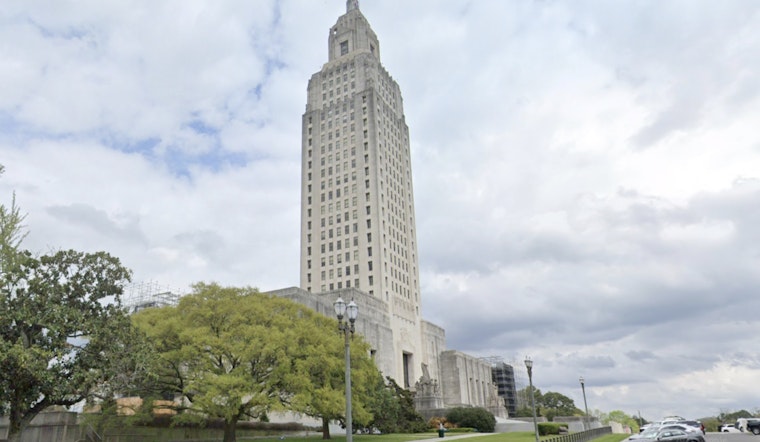
A bid to let Louisiana parishes decide whether to block carbon dioxide storage projects stalled out Tuesday when a key House committee shot down six related bills. The House Natural Resources Committee rejected Rep. Mike Johnson’s statewide local option proposal, House Bill 5, on a 7-9 vote, along with five parish specific measures that would have opened the door to local referendums on Class VI injection wells, CO2 pipelines and sequestration projects. That outcome effectively shelves Johnson’s approach for this legislative session.
The string of defeats was first reported by New Orleans CityBusiness. The official text and digest for the statewide bill are posted on the Louisiana Legislature website.
Dustin Davidson, secretary of the Department of Conservation and Energy, told lawmakers the local option measures raise constitutional red flags and could jeopardize Louisiana’s new authority to handle federal Class VI permits. “As it stands, all of these local option bills are unconstitutional,” Davidson said, warning that passing them could prompt the EPA to reclaim control of Class VI permitting, according to New Orleans CityBusiness.
Landry’s moratorium and the state review
Gov. Jeff Landry stepped into the carbon storage fight last October with an executive order that paused review of new Class VI permit applications. The directive temporarily sidelined new proposals and instructed state agencies to prioritize a short list of pending projects while regulators update safety and public engagement guidance.
The order, Executive Order JML 25-119, spells out both the moratorium and a 45-day window for reprioritizing existing applications, according to the governor’s office.
Who controls permitting
In late 2023, Louisiana secured EPA approval to run the federal Class VI program itself, a move that shifted geologic sequestration permitting for wells inside the state from federal hands to the Office of Conservation, now the Department of Conservation and Energy. Primacy materials laying out how that handoff works were published, according to the EPA.
Where projects are planned
State permit maps and the agency’s project tracker show most of the planned CO2 storage activity clustered in western and central parishes, particularly Allen, Beauregard, Rapides, Sabine and Vernon. Operators have filed stratigraphic test wells and draft Class VI applications in those areas, according to the Department of Conservation and Energy. That concentration helps explain why several of the defeated bills targeted those specific parishes.
Political pushback and next steps
Supporters of the bills framed them as basic protections for property rights and local say-so, arguing that communities should not wake up to carbon storage projects they never signed off on. Opponents countered that the patchwork system the measures would create could inject serious legal uncertainty into a program the EPA only recently entrusted to the state, and might invite federal intervention.
Rep. Mike Johnson maintained that communities deserve a direct voice in whether projects move forward, and he joined Rep. Lauren Ventralla in challenging the agency’s reading of federal law during the hearing, as reported by Louisiana Illuminator.
Legal questions remain
The committee’s vote did not resolve the larger constitutional fight. Save My Louisiana and several landowners filed suit last November in the 19th Judicial District in East Baton Rouge, arguing that state statutes granting eminent domain authority for carbon projects are unconstitutional. Local coverage of the lawsuit has highlighted the high legal stakes for lawmakers, according to the American Press.
For now, the committee’s move cuts off a legislative route to parish-level veto power. The larger fight over who ultimately calls the shots on carbon storage in Louisiana, whether it is state regulators, the federal EPA or local communities, appears destined to keep playing out in courtrooms and committee rooms alike.





