

























































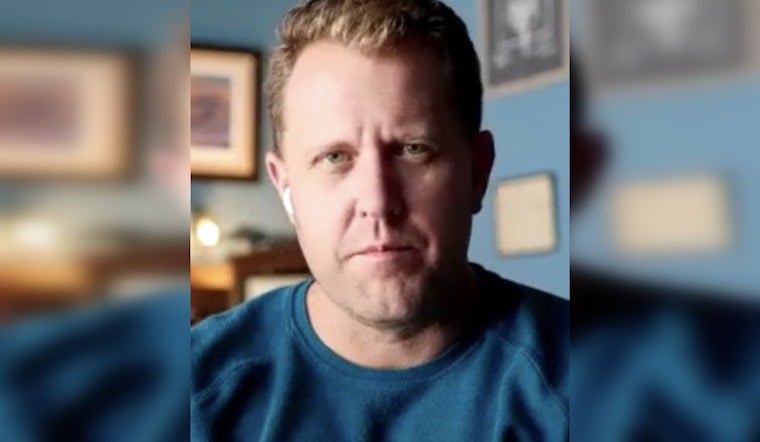
Jon Erwin, the Manhattan Beach director behind Prime Video's House of David, is making a counterintuitive argument about generative AI: he insists it can help bring production work back to Los Angeles, not just wipe it out.
To prove it, Erwin used AI-heavy workflows to shoot a three-episode companion special, The Old Stories: Moses, on a single virtual stage in roughly one week with a crew of about 100 people. Since April, he has been building on that experiment with Innovative Dreams, a Manhattan Beach production-services company he says is meant to anchor AI-driven workflows and training in the city.
As reported by the Los Angeles Times, Erwin filmed Moses largely on an LED "Volume" and leaned on generative tools to create architecture and effects that would normally require multiple locations or months of post-production work. The Times also noted that House of David hit No. 1 on Prime Video in the U.S. and was seen by about 44 million viewers worldwide, a number Erwin cites as proof that audiences still want large-scale, blockbuster-style storytelling. According to the paper, Innovative Dreams is backed by Amazon/AWS and is partnering with AI firm Luma to commercialize the workflow.
Erwin's pitch: speed, scale and "more jobs"
Erwin's sales pitch to a nervous industry is straightforward: if AI can make everything cheaper and faster, studios will say yes to more projects, which in turn keeps more people working in town.
"If you can make things quicker, and you can make things at a price point that studios will say 'yes,' you can employ more people in aggregate and create jobs," Erwin told the Los Angeles Times. He argues that AI-enabled virtual production can be three to five times faster at less than 30% of the traditional cost, and says some assets can now be generated in three or four days instead of roughly 10 weeks. According to the Times, the show's use of AI shots jumped from about 70 in season one to about 400 in season two, a leap Erwin says made several sequences feasible on a modest budget instead of a studio-tentpole budget.
Why the industry is listening — and worried
The pitch lands at a time when a lot of Hollywood workers are already on the ropes. According to The Wall Street Journal, Labor Department data show that employment in motion picture and video production is down roughly 30% from a late-2022 peak, leaving thousands of behind-the-scenes workers scrambling for steady paychecks.
A report from the Milken Institute likewise warns that California's production-related employment and regional output have weakened, undercutting the supplier and crew markets that traditionally fed Hollywood. That broader reset is part of what makes AI feel, to many workers, less like a lifeline and more like another potential wave of disruption.
What Innovative Dreams actually offers
Innovative Dreams is pitched as a one-stop shop that pulls together Luma's generative tools, AWS cloud infrastructure and on-site virtual stages so filmmakers can complete "final pixel" shots locally instead of sending work overseas. Industry coverage of the April launch describes the company as a hybrid production-services outfit with an R&D lab and virtual-production stage at the MBS Media Campus in Manhattan Beach, with Luma's "Luma Agents" included in the toolset.
As noted in Deadline coverage syndicated by Yahoo/Deadline, partners say the setup is intended to keep more of the technical work in the region while speeding up turnaround times.
Unions and rules will matter
Whether any of this turns into a real job engine for Los Angeles or just a new way to make content cheaper will depend heavily on contract language and policy. Labor leaders have been clear that they want AI rules in writing, not just assurances on a panel.
SAG‑AFTRA's contract pages and union notes show that performers won explicit AI protections in recent deals, and IATSE has pushed for safeguards for behind-the-camera crafts. Industry reporting indicates that additional bargaining over AI is expected to be central to 2026 negotiations. For more on those discussions, see SAG‑AFTRA and coverage by TheWrap.
Erwin's thesis is simple enough: if production costs drop and timelines shrink, more shows and films get greenlit in L.A., and more people work. Whether that turns into broad-based job growth or a reshaped labor market that trades some traditional crafts for new technical roles will depend on how studios, startups and unions decide to write the next set of rules for AI-era filmmaking. For now, Erwin is trying to make the case from a virtual stage in Manhattan Beach.



.jpg)