

























































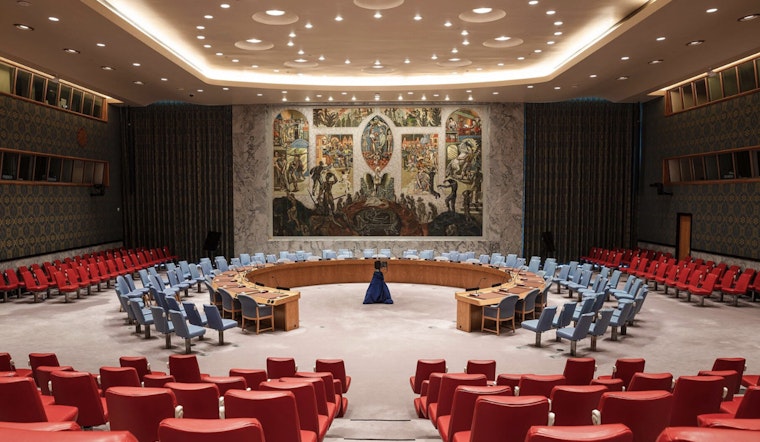
At a tense U.N. Security Council session in Manhattan on Thursday, Nickolay Mladenov, the high representative of the Board of Peace, urged council members to use “every means at its disposal” to push Hamas to disarm. He warned that each new flare-up of violence risks “unraveling” the fragile ceasefire that is holding for now.
Mladenov told diplomats that decommissioning weapons is the central condition for both Gaza’s reconstruction and a phased Israeli withdrawal, and that the enclave’s roughly two million residents cannot be left waiting indefinitely while talks stall.
The appeal builds on a Board of Peace report circulated to U.N. members that labels Hamas’ refusal to accept “verified decommissioning” as the “principal obstacle” to fully implementing the truce. The document urges the Security Council to make that requirement explicit and public, according to the San Francisco Chronicle. Council members are expected to take up the report during consultations on the Middle East this week.
The Board of Peace, a U.S.-led body created to oversee the second phase of the ceasefire, has put forward a 20-point framework that links disarmament to changes in governance and to reconstruction funding. It is a carefully sequenced but politically fraught roadmap, according to the Council on Foreign Relations. Analysts told CFR that the plan would likely require an international stabilization force, significant logistics to collect weapons, and long-term donor commitments before full-scale rebuilding can start.
How Decommissioning Would Work
Under the proposed roadmap, the most dangerous weapons would be collected first, with other arms removed in stages under international verification, The New York Times reported. Fighters who hand in their weapons would be allowed to reintegrate into civilian life.
Mladenov has described the process as needing to be “gradual, sequenced and time‑bound,” stressing that surrendered weapons would be transferred to a transitional Palestinian administration, not to Israel. That structure is meant to reassure local actors while still giving international monitors a clear line of sight on what actually gets handed over.
Obstacles on the Ground
Hamas has rejected the Board of Peace report, branding it full of “fallacies” and insisting that any demilitarization must be tied directly to Israeli troop pullbacks. At the same time, Israeli forces now control roughly 60 percent of Gaza, which complicates both verification and weapons collection efforts, according to The Associated Press.
Mladenov cautioned the council that without some form of agreement, Gaza risks remaining carved up and unstable, with its population dependent on intermittent aid and unable to mount a real reconstruction effort.
Diplomatic Stakes and What to Watch
How the Security Council chooses to frame its position now will influence whether pledged reconstruction funds are actually released, whether an international stabilization force receives a clear mandate, and how quickly monitors can operate inside Gaza, according to analysis from the Council on Foreign Relations.
Diplomats will also be watching to see whether the Board of Peace roadmap secures explicit and consistent backing from key council members during this week’s consultations, or whether support wobbles once the details of disarmament and oversight are on the table.
For U.N. diplomats in Manhattan, the choice is stark and not especially comfortable: press Hamas to accept verified decommissioning and unlock reconstruction, or slide into a drawn-out status quo that leaves Gaza’s people stuck in rubble and reliant on sporadic relief. For readers following along from San Francisco, the council’s response will help determine whether the promised donor money, international monitors and a stabilization plan amount to real change on the ground or just another stack of diplomatic paperwork.




