

























































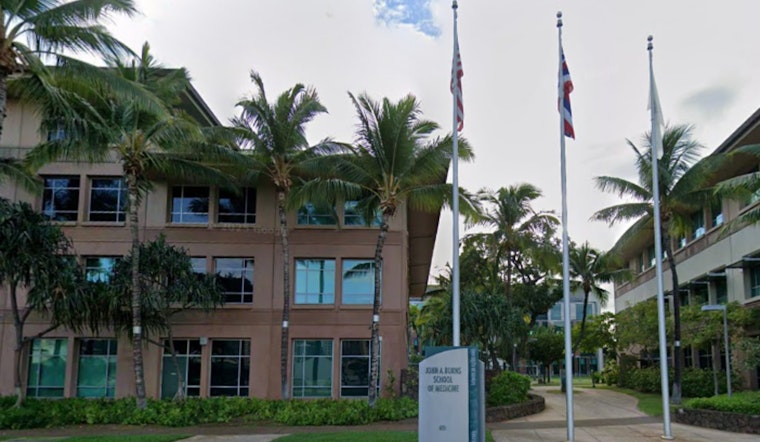
Scientists at the University of Hawaiʻi at Mānoa are helping turn a routine blood draw into a potential early warning system for one of the most aggressive forms of breast cancer.
Researchers at Mānoa joined a multi‑institution team that says it has pinpointed blood‑based genomic signals tied to inflammatory breast cancer, the rare and fast‑moving subtype that can be tough to spot with standard tests. The group reports that these signals could make the disease detectable and trackable through a simple blood test instead of repeated biopsies.
According to the University of Hawaiʻi at Mānoa, the project was led by Naoto Ueno of the UH Cancer Center, working with collaborators Savitri Krishnamurthy at MD Anderson and Alan Lambowitz at UT Austin. “The project began with simple curiosity and a lot of hard work,” Ueno said, describing how the team teased clinically useful patterns out of notoriously complex blood RNA. The UH Cancer Center reports that the markers could eventually let clinicians follow inflammatory breast cancer with blood draws instead of repeated tissue biopsies.
How the team found markers
The researchers relied on a specialized RNA‑sequencing method called TGIRT, which captures a wider range of RNA fragments than standard tools. That approach revealed elevated intronic RNA fragments and altered RNA splicing patterns in the blood of patients with inflammatory breast cancer. As reported by UT MD Anderson Cancer Center, those signals, seen across tumors, peripheral blood mononuclear cells and plasma, formed a distinct blood‑based signature for inflammatory breast cancer. “These findings provide new insights into inflammatory breast cancer that should enable clinicians to monitor disease progression simply through liquid biopsy,” Krishnamurthy said.
Peer‑reviewed backing
The work is detailed in the peer‑reviewed paper “Pervasive enhanced transcription in inflammatory breast cancer tumors and PBMCs impacts RNA splicing and intronic RNAs in plasma,” published in Science Advances. The article, published May 1, 2026, lays out the intron‑to‑exon read‑depth metrics the team used to distinguish inflammatory breast cancer from other specimens. It lists Dennis Wylie and Xiaoping Wang among its lead authors and includes contributors from MD Anderson and UT Austin. The Science Advances record provides the full methods and datasets that support the team’s conclusions.
What the test detects
Instead of focusing on DNA mutations, the team mapped the RNA species circulating in blood. They found that inflammatory breast cancer samples carried unusually high levels of intron fragments and patterns that match slowed RNA splicing. Using TGIRT sequencing, the researchers report that these RNA features appear in tumors, immune cells and plasma in a way that could be measured over time, according to UT MD Anderson Cancer Center. The authors argue that these signatures may serve both as diagnostic flags and as longitudinal markers to gauge whether treatment is working.
Why this matters in Hawaiʻi
The discovery carries particular weight in Hawaiʻi because the University of Hawaiʻi Cancer Center, the state’s only NCI‑designated cancer center, helped lead the study and houses major research facilities in Kakaʻako. According to the University of Hawaiʻi at Mānoa, the center prioritizes research on cancer disparities that disproportionately affect Native Hawaiians and Pacific Islanders, a focus that could influence how future validation studies are designed. Local clinicians said the collaboration highlights how Honolulu‑based labs can feed island‑specific data into national efforts to improve diagnostics for rare cancers.
Next steps and validation
The researchers emphasize that this is a promising proof of concept, not a ready‑made clinical test. The study examined matched tumor, peripheral blood mononuclear cell and plasma samples and used intron‑to‑exon read‑depth metrics to flag differences, but larger clinical validation studies are needed before any diagnostic reaches routine practice. The paper and its notes list funding from the National Institutes of Health, the Breast Cancer Research Foundation, The Welch Foundation and the UT MD Anderson Morgan Welch Inflammatory Breast Cancer Research Program and Clinic. The team says the next phases will involve testing broader patient cohorts and building a standardized assay suitable for clinical laboratories.
Clinicians and researchers describe the work as a hopeful advance that still has to clear regulatory review, standardization and large‑scale trials before a blood test becomes part of everyday care. For Mānoa and its partners, the study stands as a concrete example of how island‑based research can plug into national efforts to catch cancer earlier and track it more cleanly.




