

























































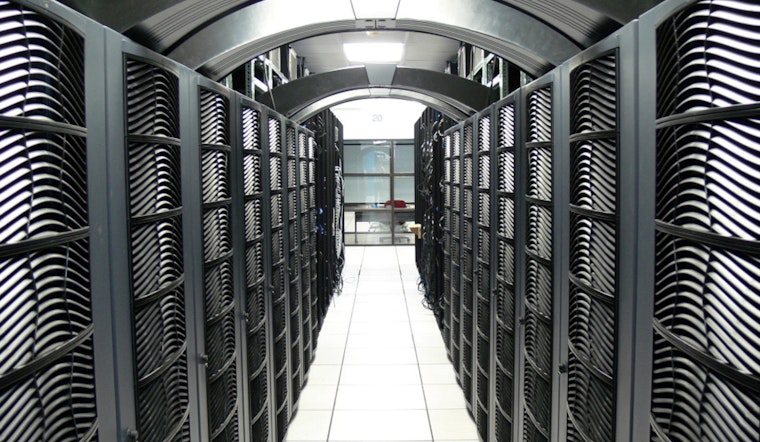
At Mansfield's Annual Town Meeting on Tuesday, May 5, voters signed off on Article 23, a zoning change that effectively slams the door on large data centers. Only very small "edge" facilities that draw two megawatts or less can be considered, and even those will face close scrutiny from town officials.
According to the town's official bylaw language, Article 23 defines a "Data Center" by maximum projected electrical demand and groups facilities into three tiers. Only Tier I sites, with a projected demand of two megawatts or less, are allowed, and only in the Planned Business District and Mansfield's I-1 and I-2 industrial zones by Special Permit from the Planning Board. The bylaw treats electrical load, not building size, as the deciding factor and lets the Planning Board cap permitted megawatts and require monitoring and conditions, according to the Town of Mansfield.
How the bylaw works
Under the new rules, medium tier facilities with projected demand between 2 and 10 megawatts and high-impact sites above 10 megawatts are off the table anywhere in town. Tier I projects can even be considered only in those limited districts and only through the Special Permit process. The Planning Board can require written confirmation from Mansfield's municipal electric and water departments that a proposed load and cooling system will not undermine system reliability, and it can attach conditions on noise, emissions, and water use, as reported by the Boston Globe.
Why towns are moving to regulate
Local planners describe Mansfield's move as a preemptive strike. There were no active data center proposals on the table, but officials wanted clear guardrails in place so developers could not roll in with massive, power-hungry complexes treated like any other warehouse. Concerns about stress on the electric grid, heavy water demand from some cooling technologies, and the hum of backup generators have fueled similar fights in communities across Massachusetts, according to WBUR.
Neighboring fights show the stakes
In Lowell, which already hosts a large Markley Group facility, city leaders approved a moratorium earlier this year and now face a civil lawsuit from neighbors. Residents say a planned 352,000-square-foot expansion and associated state air permits have harmed nearby environmental justice neighborhoods. That court fight and other neighborhood pushback are serving as a cautionary tale for towns like Mansfield that are racing to put tailored rules in place before the next proposal arrives, according to reporting by WCVB.
Patchwork of New England rules
The result for now is a patchwork. Some municipalities are trying to thread the needle with rules that welcome modest facilities, while others are tightening the screws. In Northborough, proposed warrant language would allow data centers with a maximum projected electrical demand of 5 megawatts by special permit, according to the Town of Northborough. At the state level, an effort to put a statewide pause on new data centers ran into a wall when a gubernatorial veto was sustained, as reported by Maine Public.
What's next in Mansfield
Article 23 hands the Planning Board a long to-do list. The board is responsible for confirming electric and water capacity, setting limits on approved electrical load, enforcing noise standards, and requiring operating reports and renewals for five-year permits, according to the Town of Mansfield. Local observers note that how strictly those powers are used will be watched closely. Mark Corsillo, who made tighter data center rules part of his campaign message, won a seat on the Select Board last week, per Mark Corsillo and the Town of Mansfield.
For now, Mansfield has put up a clear stop sign for big data centers. Coverage in the Boston Herald and other regional outlets shows the fight over how to balance jobs and tax revenue against power, water, and noise impacts is only just getting started.





