

























































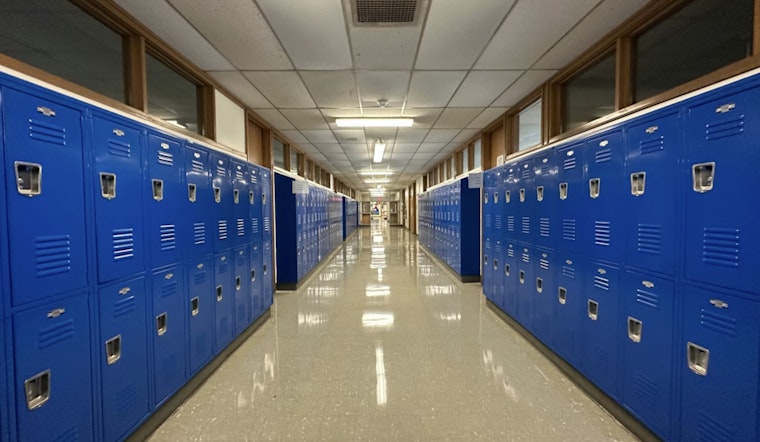
Hallway lights at Marietta Public Schools are no longer just for seeing where you are going. The district has installed a light-based gunshot detection system that turns ceilings into an instant navigation grid during an emergency. When the system is triggered, rows of fixtures blink green to mark the safest way out, while others flip to solid red or flashing red-and-blue to show where a potential threat is. District leaders say the goal is to cut through panic and give students and staff one simple instruction to follow when every second counts.
According to Campus Resilience & Security, the initial rollout includes installations at three district sites and now covers roughly 1,050 students. Local outlets also picked up the story, including reporting by KFOR.
Superintendent Brandi Naylor and School Resource Officer Jeff Mixon told KXII that the district hopes it never needs the system but wanted multiple layers of protection. Mixon said the lights "make things a lot simpler for the kids to understand" and stressed the network can also be programmed for tornadoes or other emergencies. School leaders say the idea is to give students one clear, practiced response instead of several competing instructions.
How the lights map danger and exits
The technology pairs acoustic and pressure sensors with overhead LED nodes, cameras and software that can triangulate gunfire and automatically reconfigure the lighting to guide people to safety, according to GovTech. Earlier deployments reported that the system can activate in a fraction of a second and that blinking patterns are intended to help even color-blind users recognize escape routes, as documented by NewsChannel 10. The lights can also signal first responders about the best entry point to reach the threat quickly.
Who built it and how it's monitored
The system comes from Go To Green, founded by Ernie Williams, a Marine veteran who described the product as a way to get "non-shooters" out of harm's way; "Within a second, we light pathways to get people away from the gunshot," Williams told local reporters, per WHSV. Company representatives say an operations center can relay live camera feeds and location data to responding officers, and local reporting has put rough per-school installation costs in the $50,000 to $100,000 range depending on building size, per CBS Texas.
Questions about accuracy and privacy
Experts caution that gunshot-detection systems are tools, not silver bullets: they can generate false positives and require careful testing, integration with dispatch and clear operational protocols before being relied upon. The Department of Homeland Security has evaluated gunshot detection performance and urged agencies to review limits, testing procedures and potential privacy trade-offs around camera tracking and data retention, according to DHS.
For now, Marietta officials say the lights are part of a broader safety plan and that training and drills will be updated to include the new signals. The company says interest is growing and that the same nodes can be used outdoors or to direct people during tornadoes and fires, possibilities that have prompted inquiries from other districts, according to Campus Resilience & Security.





