

























































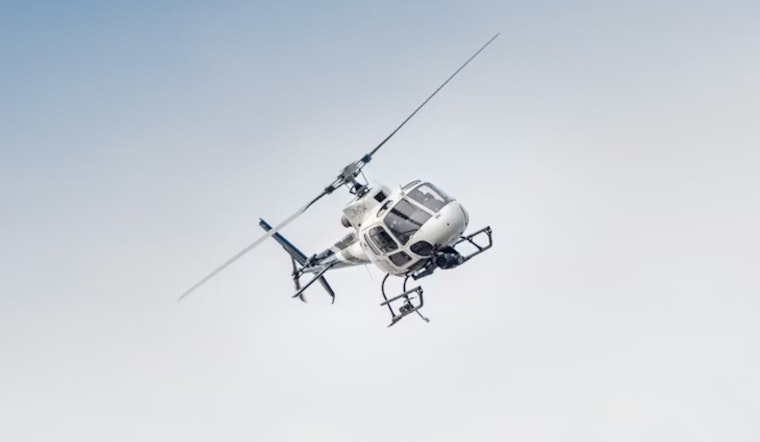
A Markham park official is taking heat after a helicopter landed in a neighborhood park as a flashy prom send-off for her daughter, touching down on public property just steps from nearby homes.
Markham Park District Executive Director Quintina Brown is at the center of the uproar after the chopper came down at Roesner Park for the big night, a landing captured on police body-camera footage that shows officers hustling to the scene. The surprise arrival has neighbors and city leaders asking who, if anyone, gave the green light and whether the stunt put the public at risk.
Police body-cam video shows officers racing up to the helicopter at Roesner Park and demanding the pilot’s registration, according to CBS Chicago. Brown handed over a notice she had signed herself authorizing the landing, while park board president Lakeya Webb told officers the helicopter “had nothing to do with the park district,” the outlet reports. Markham police told CBS the park district “cannot authorize helicopter landings on public property” and said the aircraft set down on park land and next to homes.
“Did the board approve it? Who paid for it?” Markham city attorney Burt Burleson asked in an interview with CBS Chicago, warning the episode exposed both the city and the park district to legal risk. Village manager Derrick Champion told officers there had been no communication from the park district at all and said “the safety of everyone in the park was compromised,” according to the same report. Officers cited both Brown and the pilot for disorderly conduct and for an unauthorized landing on public property. Brown faces a fine just under $200 while the city’s legal team weighs whether additional penalties or actions are warranted.
What the Rules Say
The dust-up sits in the gray zone where federal flight rules meet local control over public land. The Federal Aviation Administration sets safety standards for where aircraft can fly and how low they can go, but decisions about using public property for takeoffs and landings typically fall to the landowner or the local agency in charge.
Under the FAA’s minimum-altitude rule, helicopters may dip below standard altitudes when they are taking off or landing, but operators still have to avoid creating hazards for people or property on the ground, according to Cornell Law School. The National Park Service, for instance, limits aircraft operations on public lands to designated landing sites, a policy that shows why many public-land managers insist on permits or explicit written permission before any helicopter touches down on their turf (National Park Service).
Local Fallout and Next Steps
In Markham, residents see the uproar as part safety scare and part trust test. City officials say clearer communication and a formal permitting process could have prevented both the potential danger and the neighborhood shock.
Brown told CBS she did not think she needed to contact the city beforehand and said she did not see a conflict of interest in signing off on the landing herself. Now it is up to Markham’s legal staff to decide whether the citation and relatively small fine are enough, or if the episode calls for board-level or administrative action.
The controversy highlights how fast a private celebration can turn into a very public headache when it spills onto public land and involves public officials. Markham’s review is still underway, and residents and local leaders will be watching closely to see whether the helicopter flap leads to tighter rules or tougher enforcement for future aircraft landings in city parks.




