

























































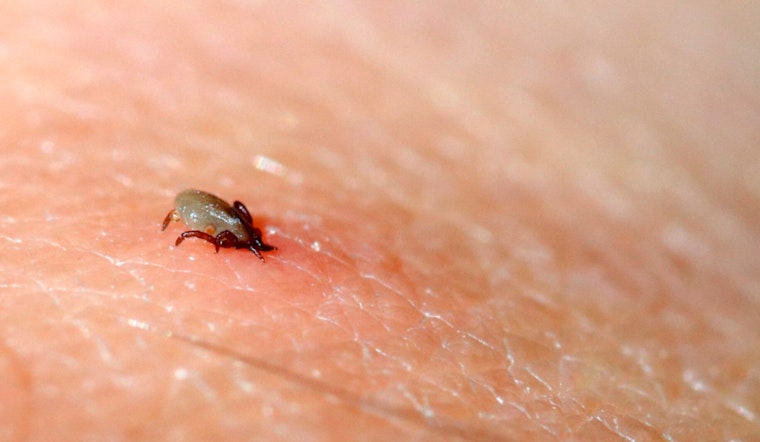
This summer, a pocket-sized science project out of MIT is heading straight for New England medicine cabinets. An MIT researcher is rolling out an at-home kit that lets people test removed ticks in minutes to see whether they carried the bacterium that causes Lyme disease. The startup’s design pairs a sealed “tick crusher” with a rapid test strip and an app that links users to clinicians for follow-up.
What’s coming this summer
Erin Dawicki, a physician associate and MIT fellow, is leading the charge with her company LymeAlert. CBS Boston reports that the test can detect the Lyme bacterium from a crushed tick in about 15 minutes, and that a limited batch of 5,000 kits is expected to ship in August.
Dawicki told the station that the goal is to get the kit into “everybody's medical kits.” The companion app is designed to offer telehealth connections so users can quickly talk through antibiotics and other next steps within what the company describes as a 72-hour treatment window, according to CBS Boston.
How the kit works
The LymeAlert kit ships with three main pieces: a “Tick Crusher” to safely mash the bug, a processing solution tube and a lateral-flow test strip. The company’s product page says the kit can process up to five ticks, and that if Borrelia burgdorferi is detected, a visible line appears on the strip.
The same page notes that the test is intended “for informational purposes only.” The app is meant to walk users through each step of testing and then connect them to telehealth services for medical advice, according to LymeAlert.
Regulatory and accuracy questions
Not everyone is ready to crown the gadget a Lyme-detecting crystal ball. Clinical guidelines caution that finding the bacterium in a removed tick does not reliably predict whether the person who was bitten will actually develop Lyme disease. The Infectious Diseases Society of America and partner medical societies recommend that clinicians do not use tick-test results as the sole basis for deciding on treatment, according to the Infectious Diseases Society of America.
State public-health agencies echo that message, advising that tick testing should not replace a clinical evaluation, and that clinicians generally make the call on prophylaxis and treatment based on exposure details and symptoms, per the California Department of Public Health.
Why experts are watching now
The timing is not accidental. Public-health data show a brisk start to tick season. The CDC’s Tick Bite Tracker indicates that emergency department visits for tick bites are at their highest levels for this time of year since 2017 in most regions, suggesting an early, active season that could fuel demand for quicker decision tools.
The tracker draws on near-real-time syndromic surveillance data and is intended to help communities see when people are most at risk, according to the Centers for Disease Control and Prevention.
What to do if you find a tick
If you find an attached tick, health officials say speed and technique matter more than gadgets. Remove the tick promptly with fine-tipped tweezers, pulling straight up, then wash the bite area. If you want it identified or tested, save the specimen in a sealed bag.
Watch for fever, rash or other symptoms over the following weeks and call your doctor if you feel unwell. Some state public-health pages note that, in selected cases and under a clinician’s guidance, a single prophylactic dose of doxycycline given within 72 hours of tick removal can be considered. That decision is typically based on how and where the bite happened, and on clinical judgment, per guidance from the California Department of Public Health and the Wisconsin Department of Health Services.
From MIT labs to medicine cabinets
LymeAlert traces its roots to MIT entrepreneurship programs, where the concept moved from an early prototype toward beta production and manufacturing partnerships. The startup has been profiled by VentureWell as it worked through the usual startup hurdles, from lab bench to factory floor.
The company has drawn early backing from Lyme-focused investors and has preorders open on its website. Even with the buzz, public-health experts emphasize that any at-home tick test should be paired with guidance from a clinician, not used as a standalone decision tool, according to Bay Area Lyme Ventures.





