

























































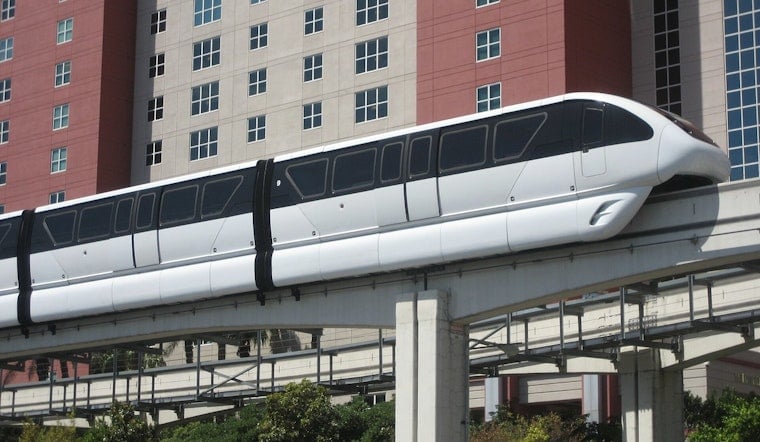
Las Vegas’ tourism power brokers are eyeing a major shakeup in how visitors cruise up and down the Strip. LVCVA president Steve Hill has outlined a concept that would scrap the aging Las Vegas Monorail and drop a two-lane roadway on top of its elevated guideway for the Vegas Loop instead. The plan would reuse the monorail’s existing stations and plug new stops into nearby parking garages and ramps, effectively turning the 3.9-mile elevated corridor into another piece of the Loop network. If it happens, the shift would change how tourists move along the resort corridor and could redefine the future of the monorail’s roughly four-mile route.
Hill’s Comments and Where They Came From
Hill floated the idea while speaking to the Southern Nevada Home Builders Association, saying “It will incorporate the Monorail,” and explaining that crews would remove the track and “put a pre-cast two-lane road on top” while keeping the stations, according to The Nevada Independent. His remarks are the most detailed public explanation so far of how the Las Vegas Convention and Visitors Authority might fold the elevated guideway into Elon Musk’s Boring Company system. The focus has now tilted from simply swapping out worn-out trains to reimagining the entire corridor as a surface connection for the Loop.
What the Authority Already Owns
The LVCVA took control of the Las Vegas Monorail by buying it out of bankruptcy in December 2020, a move the agency said eliminated a non-compete clause that had restricted other transit options along the Strip and kept all seven stations intact. In announcing the deal, the authority pointed out that the elevated line had historically carried nearly five million riders each year and pledged to keep the trains running while it figured out the best long-term use for the right-of-way. LVCVA lays out the purchase details and the agency’s stewardship of the corridor.
Why the Authority Says the Swap Makes Fiscal Sense
Hill has stressed that bringing the monorail up to modern standards would not be cheap. Replacing the existing trains and related infrastructure would cost “$200 million-plus” for just nine trains, he said, and the authority has stacked that number against what it believes it would pay to build and run Loop tunnels and above-ground links. That comparison helps explain why LVCVA is entertaining something more radical than a standard rail refresh and why the Boring Company, which already runs the LVCC Loop, is now central to the Strip transit conversation. The Nevada Independent first reported Hill’s cost estimate and his side-by-side look at the options.
Safety, Oversight and Political Questions
Turning the monorail guideway into a Loop roadway would not just be an engineering exercise. The proposal would immediately collide with longstanding questions about the Vegas Loop’s safety record, environmental compliance and regulatory oversight, since it is a privately operated transit system. Investigative reporting has highlighted complaints and regulatory actions related to tunnel construction, and Nevada lawmakers have pressed state officials about fines and permitting decisions. The Associated Press has reported extensively on those concerns, which would likely surface again if LVCVA tries to convert the monorail corridor.
What Riders Should Expect
For now, the monorail still runs along its 3.9-mile elevated track, serving seven stations that cater mainly to convention attendees and tourists, including stops at SAHARA, Westgate and the Las Vegas Convention Center. The operator’s route map shows that lineup, and the Boring Company already has a Loop station at Westgate that opened in January 2025, so parts of the future network are already touching. Las Vegas Monorail lists the active stations, and Westgate Resorts announced the Loop stop at its property last year.
Converting the monorail guideway into an above-ground extension of the Vegas Loop would be a long, complicated lift, involving years of engineering work, permitting battles and sign-offs from regulators, not to mention cooperation from Strip property owners. For now, Hill’s public comments are the clearest window into what the authority is considering. Detailed plans, drawings and hard cost estimates would need to arrive before any track comes down or new pavement goes up, so expect more rounds of scrutiny and public review as LVCVA and the Boring Company push the concept through the technical and regulatory gauntlet.


