

























































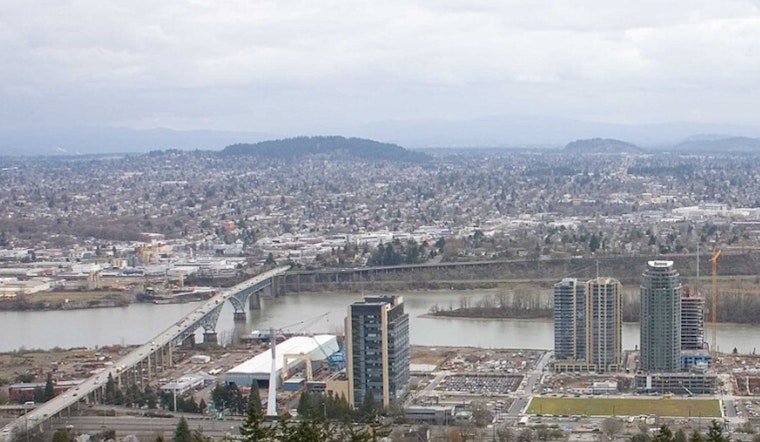
Private investors have quietly locked up an option to buy much of Ross Island, the string of gravel-mined islets in the Willamette River just south of downtown Portland. The move, documented in a recently filed memorandum, is already stirring debate over whether the island’s deep, algae-choked lagoon should become a closer-in dumping ground for contaminated sediment from the long-running Portland Harbor Superfund cleanup. Regulators, civic groups, and state officials now have a tight window to sort through environmental tradeoffs and financial incentives if the idea moves forward.
According to The Oregonian/OregonLive, a memorandum filed in Multnomah County land records shows Heronpark LLC has signed an agreement with R.B. Pamplin Corp. and Ross Island Sand & Gravel. The deal gives the investor group an option to purchase roughly 350 acres of the Ross Island archipelago at any time over the next five years. The document carves out about 50 acres and a one-acre Toe Island that are owned by the city and specifies that any sale must close on or before January 2033.
How the Lagoon Plan Would Work
The pitch from industry supporters is relatively simple: use the Ross Island lagoon, a roughly 130-foot-deep former mine pit, to receive, cap, and contain dredged sediment taken out of the Portland Harbor Superfund site. The goal would be to cut down on long-haul transportation and landfill costs. That concept was laid out in recent reporting by the Oregon Journalism Project. The EPA’s public timeline shows remedial action agreements and in-water work are expected in the 2027–2028 period, which puts added pressure on regulators to decide whether the lagoon option fits into the cleanup plan.
Who Is Pushing for Change on the Island
Civic groups have stepped up in recent weeks, arguing that Ross Island should be reclaimed and restored rather than left in private industrial use. The City Club of Portland has urged the governor’s office to help guide a reclamation strategy and has brought tribal and state agencies into public briefings, according to reporting from KPTV.
Cleanup Costs and Liability
Reporters and industry sources have underscored the sheer scale of the Portland Harbor job. Millions of cubic yards of sediment, some of it contaminated with PCBs and other pollutants, must be managed, and roughly 150 parties could ultimately be tagged as potentially responsible for cleanup costs. The money at stake is enormous. Past EPA work has pegged the cost of hauling and disposing dredged material at distant landfills at around $1 billion, while more recent industry estimates put the figure far higher. That financial reality is a major reason the Ross Island lagoon repository idea has gained traction in planning discussions described by the Oregon Journalism Project.
Regulatory Hurdles
Turning the lagoon into a receiving site for dredged material would require a full slate of state and federal approvals, including an Oregon Department of Environmental Quality 401 water-quality certification and review by the U.S. Army Corps of Engineers under the Clean Water Act. DEQ guidance spells out how proposed fill at Ross Island is evaluated and the state’s oversight role in reclamation work, and state agencies have already pursued enforcement tied to missed reclamation requirements. Earlier coverage notes that the state has sought roughly $13.9 million in penalties over unmet reclamation obligations at the property, a figure that complicates any quick handoff of ownership and responsibility (Willamette Week).
What Heronpark Says and What Comes Next
Public records and news reports identify Heronpark LLC as the company that secured the option. The memorandum and interviews with the group indicate it is working on a financial-assurance package that would include an endowment to care for any restored island. Heronpark manager Gary Keyes told reporters the group is not acting as a stand-in for potentially liable parties and declined to name the investors. He said the company expects to secure commitments from potentially responsible parties in late 2026 or early 2027 and that a closing would likely occur in 2027 or 2028 at the latest. Those timelines and the option terms are described in public records and reporting by The Oregonian/OregonLive, and any concrete move will hinge on state and EPA approvals along with close community scrutiny.




