

























































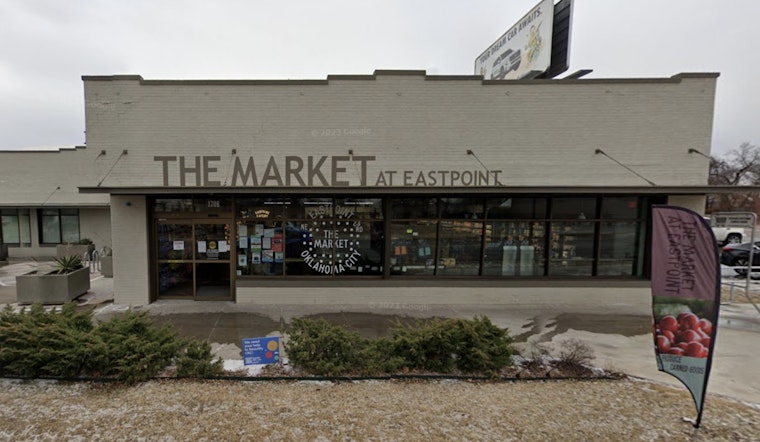
The Market at Eastpoint is turning five this week, and for a lot of northeast Oklahoma City residents, that birthday feels personal. The community-run grocery on Northeast 23rd opened in 2021 in a long-standing food desert and has spent the last few years quietly rewriting the neighborhood’s daily routine, from how people shop to where they work.
What started as a roughly 7,000-square-foot experiment has grown into a local hub that sells fresh produce, houses an on-site eatery and provides steady paychecks to nearby residents. Regular customers say quick grocery runs have replaced cross-town treks, and even elderly neighbors now make the walk to grab what they need. With that pilot up and running, RestoreOKC is trying to turn one successful store into a broader safety net by raising money to keep a full-size grocer open at NE 36th and Lincoln.
From Food Desert To Neighborhood Store
The Market at Eastpoint opened in spring 2021 in a roughly 7,000-square-foot space at 1708 NE 23rd St., part of the EastPoint development. RestoreOKC designed the store as a kind of hybrid: farm-grown produce in the aisles, the Eastside Eatery on-site and workforce training tied to its urban farm on NE 27th. As outlined by The Market at Eastpoint, the concept was built to function as both a grocery store and a community resource.
Fresh Food Demand Is Real
RestoreOKC director Caylee Dodson says demand for fresh produce has blown past expectations. The store’s fresh-produce category is running at roughly three times the national average, a sign that when fruits and vegetables are close and affordable, people buy them. Leaders estimate the Market has created more than 180 jobs and generated about 7.5 million dollars in local economic activity.
The Market also leans on SNAP-friendly programs and Double Up incentives that stretch food benefits for fruits and vegetables. Those tweaks at the checkout line are quietly changing daily habits, with more residents able to put healthier options in their carts. Local reporting on the anniversary has highlighted those gains, as reported by KFOR.
Jobs, Local Ownership And Daily Customers
Inside the store, RestoreOKC and managers point first to the staff list. Roughly 65 percent of employees live within the store’s ZIP code and about 35 percent live within walking distance. Those numbers are a deliberate choice that leaders say helps the Market feel like a neighborhood business instead of an outside chain.
That local approach shows up in the day-to-day. Jocelyn Gains, who has worked at the Market since it opened, told News 9 that one 92-year-old customer still walks to the store at least twice a week. For staff, stories like that are part of the point. The job is not only stocking shelves but making it possible for nearby residents to shop close to home.
Scaling Up: A Push To Save A Full-Size Grocer
Now RestoreOKC is trying to prove the model at a larger scale. The group is in talks to acquire the bigger Homeland store at NE 36th and Lincoln in an effort to preserve full-service grocery access for the east side. The partnership that launched the Market at Eastpoint grew out of a public-private plan described when the store opened, and industry reporting notes the surrounding neighborhood had been without a full-service grocer since 2019.
To keep the larger store running under community-aligned management, RestoreOKC will need roughly 7.5 million dollars, according to local coverage. The idea is not to build a flashy new project, but to keep a key piece of everyday infrastructure in place. As reported by Supermarket News.
Why It Matters
For a part of Oklahoma City where health and opportunity have long lagged behind other areas, the Market at Eastpoint is a very practical kind of intervention. It puts fresh food closer to home, creates a training pipeline and builds jobs that are intentionally local.
RestoreOKC frames the work as more than just retail. The goal is to reconnect local farms, small businesses and workers in a way that could slowly shift long-term health and economic outcomes for the neighborhood. The model, the services and the early results are laid out on the Market’s own site and in local reporting, which together sketch a simple idea with big implications. As outlined by The Market at Eastpoint.





