

























































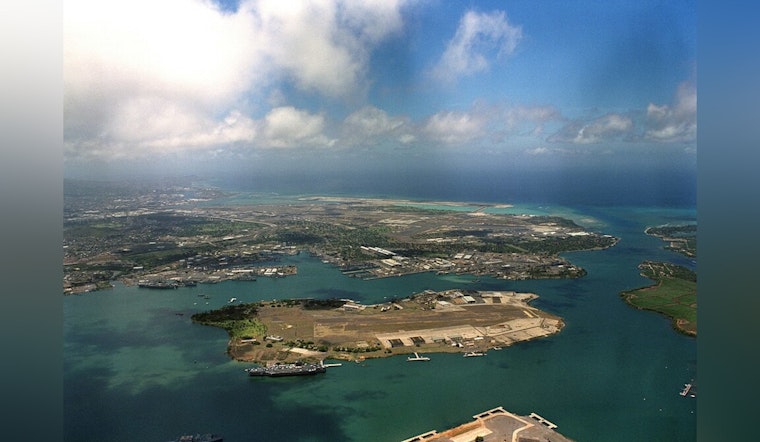
Thousands of gallons of untreated wastewater spilled into the waters by the Pearl Harbor Naval Shipyard on Friday after a pipeline break on base, Navy officials said, underscoring ongoing concerns about the installation’s aging infrastructure.
The rupture on a line used to offload wastewater from ships in port sent an estimated 2,250 gallons near the shipyard piers. The failure was discovered around 7 a.m., and crews had the flow stopped by noon, according to base officials. No ship was connected to the line at the time, and the discharged wastewater cannot be recovered. The Navy reported the incident to the Hawaii Department of Health and says the wastewater is expected to naturally break down in the environment.
According to Hawaii News Now, Joint Base Pearl Harbor‑Hickam officials confirmed the volume of the spill, its location near the piers, the discovery around 7 a.m., and the shutdown by noon. Officials also described the failure as occurring on an offloading pipeline and reiterated that no ship was attached to the line when it ruptured.
What Officials Say And Public Guidance
The Department of Health’s Clean Water Branch is responsible for shoreline water‑quality advisories and tells the public to steer clear of surface waters that may be contaminated. The branch posts notices and guidance for any affected beaches and outlines reporting and response steps on its general health‑advisory page.
In this case, crews at the base stopped the flow from the broken line, and follow‑up monitoring and any necessary advisories fall under standard DOH procedures. Residents with questions or concerns are directed to DOH for updates, test results, and contact information.
How This Fits Into A Larger Pattern
The incident follows a March bypass that routed more than 5 million gallons of UV‑treated effluent offshore after heavy rains, an episode that drew fresh scrutiny to Joint Base Pearl Harbor‑Hickam’s wastewater operations.
Federal oversight has kept a steady spotlight on water‑system management at the base in recent years, and the EPA continues to require infrastructure improvements, ongoing monitoring, and detailed reporting. Regulators say that public notifications and water sampling are the typical steps used to determine whether recreational waters or marine life have been affected by a spill.
What To Watch Next
Residents, boaters, and shoreline users are being urged to watch for updated sampling results and advisories from the Navy and the Hawaii Department of Health. This story will be updated as state or base officials release test results or additional details about the rupture and the repairs.





