

























































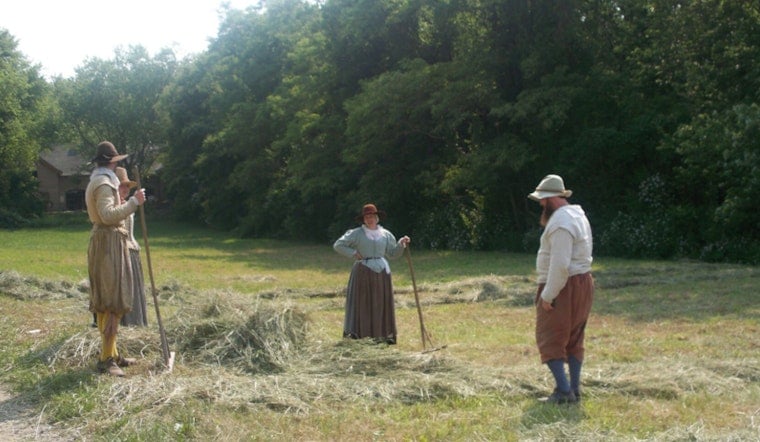
Costumed interpreters at Plimoth Patuxet Museums in Plymouth have officially moved into the newly rebuilt Alden House in the English Village, turning a fresh construction site into a lived-in colonial home. Rooms are now filled with period-style furniture and lath shelving, and the first hearth fire has been lit. Staff and performers hauled in planks, set out plates and kindled that inaugural blaze this week, marking the shift from building project to full-on living history. Museum leaders say the now-occupied house will deepen visitor conversations about early colonial life ahead of a busy summer season.
Dan Rosen, the museum’s curator of colonial material culture, led the team that carried belongings into the Alden home and positioned period furniture and shelving. Executive Director Tom Begley said the two new houses will be essential for teaching visitors about the Alden and Winslow families. The Winslow house is expected to be finished next month, and museum staff have already opened portions of the rebuild to the public so visitors can watch traditional building techniques in real time. These details, including reporting that the project received a $150,000 state grant, were described by The Boston Globe.
Built for visitors and for the long haul
Plimoth Patuxet has framed the rebuild as part of an America 250 initiative called “Revolutionary Ideas Started Here,” a push to expand programming and prepare for an expected summer surge. The museum’s 2026 season materials stress hands-on experiences across its living-history sites, inviting guests to roll up their sleeves and step into the work of historic craft and foodways rather than just watch from the sidelines. As outlined by Plimoth Patuxet Museums, the project aims to balance historically informed methods with modern durability so these stories can be told inside sturdy, functional buildings for years to come.
Old tools, new tweaks
The Alden and Winslow houses keep the classic post-in-beam look and interior daub walls associated with 17th-century New England, while adding subtle modern protections behind the scenes. Crews set prefabricated concrete piers under key load-bearing posts to limit rot and cut down on annual repair costs. Costumed interpreters joined in on construction tasks, wielding 17th-century tools alongside modern artisans, and the museum invited the public to help with supervised jobs like daubing. Photographs and on-site reporting show staff lighting new hearths and arranging everyday objects so visitors can sit, talk and learn inside an actively occupied house, as reported by The Boston Globe.
Who paid for it
Public and institutional dollars helped get the rebuild across the finish line, although reported figures vary across disclosures. Plimoth Patuxet’s own materials highlight Destination Development support tied to its America 250 preparations and describe how that funding was meant to underwrite multiple site improvements, not just the new village homes. The state’s Destination Development Capital program has been awarding grants to cultural destinations in recent years. See Plimoth Patuxet Museums for the museum’s framing of the project and the official listing of DDC recipients on Mass.gov.
For visitors, the impact will be as practical as it is theatrical. Instead of peering at static displays from a distance, guests can now sit at a table, warm themselves by a fire and quiz a costumed interpreter about daily chores, politics and survival in the early colony. Museum leaders say the occupied houses will help foster a more nuanced understanding of Pilgrim life and politics this summer. Plimoth Patuxet plans to run its full summer program alongside other America 250 events on the Plymouth waterfront.





