

























































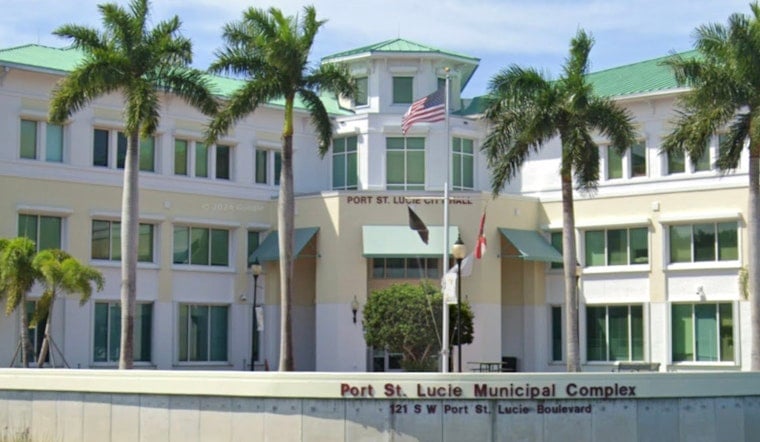
Port St. Lucie is not waiting around to see what happens to its taps. The city is moving ahead with a new $31.8 million drinking water treatment plant after officials concluded the current system could run into a capacity crunch within a few years. The Discovery Water Treatment Facility will go on city-owned land near the Tradition area and is designed to add millions of gallons per day of treated water while handling brackish supplies. City planners say new storage tanks could be online in mid-2027, with the first new treated water arriving by the end of 2028 and the initial build-out wrapped by mid-2029.
The City Council has tapped Jacobs Engineering to design and deliver the Discovery plant and signed off on roughly $31.8 million for the project. The plan calls for ramping to an initial 10-20 million gallons per day, with room to expand to 30-40 million gallons daily, and the project is expected to move into permitting before construction begins. As reported by WPTV, officials hope the schedule is aggressive enough to head off an expected near-term capacity shortfall.
The city’s Utility Systems Department warned that the alternative to acting now would be a supply squeeze that could trigger "water-use restrictions and higher bills." That warning, along with the tight timetable officials laid out to avoid it, played a central role in the Council’s decision, the reporting shows. WPTV notes that the timeline is meant to avoid emergency measures, moratoriums on development and service disruptions.
Regional Planning Shows Rising Demand
Port St. Lucie’s move slots into a much bigger regional planning puzzle. The Upper East Coast planning area, which covers St. Lucie and Martin counties, is under active review for how to meet growing demand through 2050. The South Florida Water Supply Plan for this region is being updated as part of broader work by the South Florida Water Management District. The city’s own water-supply work plan ties local strategy to those regional projections and maps out how Port St. Lucie intends to secure long-term supplies, according to the City of Port St. Lucie. Together, those planning documents help explain why the city is prioritizing a brackish-water, membrane-based treatment project now instead of leaning on short-term fixes.
How the Plant Will Treat Water
Officials say the Discovery facility will rely on advanced reverse-osmosis membranes to treat brackish Floridan aquifer sources and to keep finished-water quality stable as groundwater chemistry shifts. Jacobs has a track record designing membrane and PFAS-removal projects in Florida and elsewhere, which helped explain why it was selected for planning and delivery services. Using membrane technology gives the utility a flexible treatment train that can be scaled and adjusted as demand and raw-water quality evolve. Jacobs materials highlight that experience.
What It Will Mean for Residents
The city has not announced specific rate changes tied to the new plant, but leaders say investing now should avoid costlier emergency fixes later. Around Florida, utilities are confronting tough choices, from desalination to potable reuse, and those big-ticket projects have been a major driver of rising water bills in recent years. Florida Trend places Port St. Lucie’s decision in the broader context of expensive water infrastructure and surging demand across the state.
Next steps for the Discovery project include permitting with state and federal agencies, public outreach and community meetings on construction impacts and design details. That will be followed by site work in 2027 and staged commissioning through 2029. If the schedule holds, the new tanks and treatment trains are expected to prevent near-term restrictions and give the city breathing room to pursue longer-term regional solutions while expanding capacity as needed. City officials say they will post public meeting notices as permits move forward.





