

























































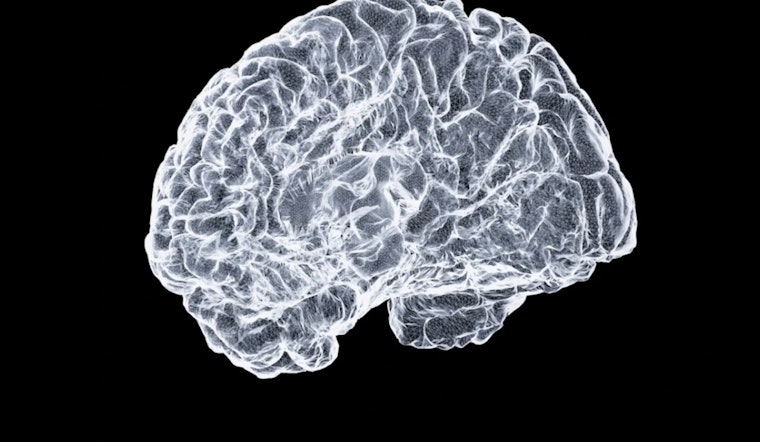
A Portland startup says it has preserved an entire pig brain down to individual cells and synapses, and it is now preparing to offer the same preservation process to terminally ill people who want their brains stored for a possible future revival. The claim, laid out in a March research preprint and on the company’s site, turns what has long been a technical debate about memory preservation into a very immediate local story.
How the protocol works
The protocol relies on extremely rapid surgical perfusion. Roughly ten minutes after cardiac arrest, a catheter is inserted, blood is flushed from the circulation and an aldehyde fixative is run through the vessels to crosslink proteins and lock tissue structure in place. That fixed tissue is then perfused with cryoprotectants to replace water, which would otherwise form damaging ice crystals, and cooled to roughly −32°C (about −26°F) for long-term storage, according to Nectome.
Timing is everything
In laboratory tests on adult pigs, the researchers report a narrow “perfusability window.” When the washout and fixation began in under about 14 minutes after cardiac arrest, they saw clean ultrastructural preservation. Perfusions that started closer to 18 minutes showed clear cellular breakdown instead. Those results are described in the team’s preprint listing and related summaries of the work. Life Science Network summarizes the paper’s finding that the roughly 14-minute limit is the critical margin for preserving connectomic detail.
From pigs to people: the Oregon plan
The company says it intends to invite terminally ill volunteers to Oregon within months and to time the preservation so it begins as soon as doctors confirm death, using the state’s physician-assisted death framework to cut down the post-mortem delay. Anyone who participates would have to donate their body and brain for research. The company and the preprint both stress that the procedure is designed so tissue is fixed while circulation has only recently stopped. Earth.com reported the company’s plan and the timeline the authors describe.
Preservation versus revival
Researchers not involved in the work emphasize a hard distinction. Chemical fixation can preserve structure, but it does not preserve biological life, and no current technique can bring fixed tissue back to life. That caveat sits at the center of critiques that even a perfect structural map may not tell us how to recover a living, continuous mind. ScienceNet covered comments from outside scientists who describe the method as fixation that leaves tissue biologically dead and question whether any later reconstruction would truly be the same person.
Legal and ethical questions
The proposal leans on Oregon’s Death With Dignity framework, which governs when and how terminally ill adults may obtain physician-prescribed medication to hasten death, and that legal backdrop is likely to shape both how volunteers are recruited and how regulators respond. The Oregon Health Authority maintains the statutory rules and reporting tied to the program, and ethicists warn that pairing physician-assisted dying with a commercial preservation service could test the law’s intent and raise consent issues. Preservation researcher Brian Wowk has also argued publicly that declaring death at the moment blood flow stops is a practical decision rather than a strict biological boundary, a nuance the company and observers say complicates the debate. Oregon Health Authority provides context on the law and the critics’ concerns.
Portland connection and what to watch
Nectome is based in the Portland area, and its research page links to the team’s preprint and supporting images. Local hospitals, ethics boards and state public-health officials will be the immediate arena for any volunteer recruitment or reviews. Watch for filings, institutional review board notices or state reporting tied to any human work; those documents will be the clearest sign that the project is moving from lab milestone to clinical practice. See Nectome’s own research listing for the team’s description of the protocol. Nectome
Technically, this is a milestone for large-scale tissue preservation: the team says it can hold ultrastructural detail in place. But mapping a full human connectome or converting preserved structure into a living mind remain speculative and distant tasks, and the near future will be shaped as much by patients, ethicists and regulators as by electron microscopes.





