

























































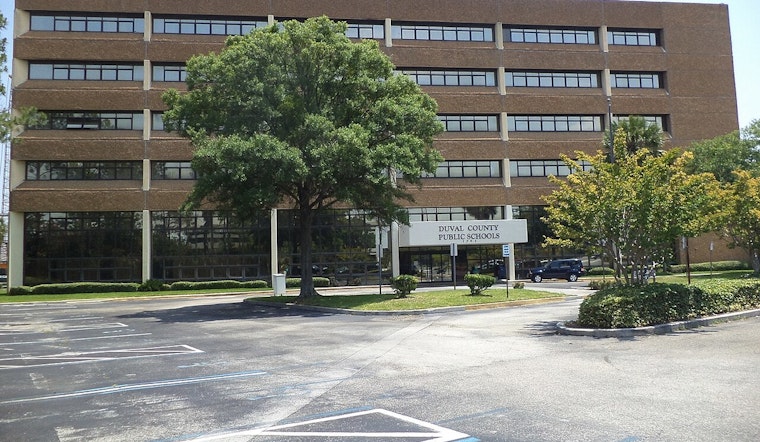
Duval County Public Schools has quietly pulled dozens of well-known books from school shelves under a state-mandated review, and the low-key approach is now getting loud pushback from national free-expression advocates. PEN America argues the district's internal review lacks transparency, while local reporting shows the district’s publicly posted "not-approved" list has more than doubled in recent months. At the same time, the district is handling about 10 formal book challenges as the wider compliance review rolls on.
PEN America labeled the removals "disconcerting" in a May 13 statement and called out specific titles such as The Handmaid’s Tale, I Know Why the Caged Bird Sings and 19 Minutes, urging Duval to spell out its criteria and restore books taken off shelves without a clear public process, according to PEN America. Reporting by Jacksonville Today links much of the surge in removals to the district’s internal compliance review, which staff said covers roughly 1.6 million items, rather than to formal objections from parents or community members. Advocates warn that broad administrative sweeps can sidestep the public committee process the board adopted last December.
District says removals follow state law
Duval County Public Schools maintains that the removals are simply part of a "state-mandated review process" that requires certified media specialists to vet every school library and classroom collection, according to the district's review information. Duval County Public Schools details the required training, evaluation criteria and the public list of "not-approved" titles, along with guidance that material judged pornographic can carry criminal exposure under state statute. District officials say the process applies to all materials, not just those named in formal challenges, and that they are following timelines set by the School Board.
PEN America: Internal review lacks transparency
“When you have an internal review, there’s no transparency,” William Johnson, PEN America’s Florida director, told News4JAX, noting that the removals can hit students hardest when school is their main source of books. PEN says the district appears to be driven more by an internal compliance sweep than by formal challenges from parents or other residents and has pressed Duval to publish clear standards and timelines. The group is calling for the restoration of titles removed without a transparent, public review.
Scale, staffing and the role of context
Local reporting has highlighted the sheer size of the job: two district media specialists told Jacksonville Today they are overseeing a review of roughly 1.6 million items, and only a small fraction has been examined so far. Library experts quoted in that coverage urged reviewers to assess entire works in context rather than pulling out isolated passages, pointing to legal standards such as the Miller test that help define obscenity. Critics argue that thin staffing paired with sweeping rules can spotlight provocative lines while overlooking a book’s literary merit or educational value.
Board policy and the Material Review Committee
The School Board revised Board Policy 4.30 in December 2025 to clarify how formal challenges are handled, creating a board-appointed Material Review Committee and setting public-meeting rules and timelines for appeals, according to district documents. The policy requires certain materials deemed pornographic or sexually explicit to be removed from circulation while they are under review and spells out who sits on the committee and how quickly it must report back. Supporters say the revisions build in more accountability around formal complaints, but advocates point out that those safeguards do not apply to removals carried out through internal compliance sweeps.
Duval in the national picture
PEN America’s national index recorded 3,743 unique titles removed from U.S. school libraries and classrooms in the 2024-25 school year and found that bans on nonfiction more than doubled in that period, a trend that has raised alarms about educational material vanishing from K-12 collections, according to PEN America. The organization reports that the wave of removals disproportionately targets books reflecting marginalized identities and an increasing share of educational nonfiction. That broader pattern helps explain why relatively quiet decisions inside Duval schools are drawing the attention of authors, civil-liberties groups and national advocates.
For now, the combination of formal challenges and a sweeping internal review will decide which titles Jacksonville students can still find on school shelves, and advocates say transparent reporting and clearer standards are needed to keep those decisions accountable. Parents and community members who want to track what happens next can follow the district’s public materials and look for upcoming Material Review Committee meetings as the review moves forward.





