

























































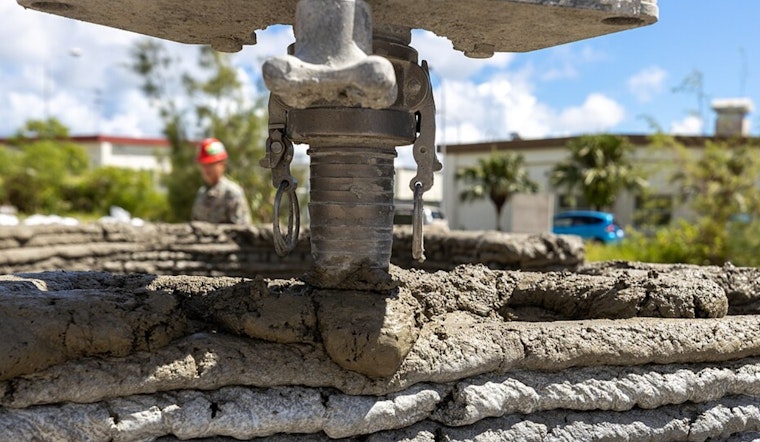
Detroit is about to get a lot more concrete robots. Colorado-based Alquist 3D, a robotic concrete-printing company, has secured a $1.6 million state grant and plans to open a manufacturing and R&D hub in the city, officials announced Tuesday. The new center is expected to build robotics that 3D-print walls and structural components, and to offer workforce training tied to community colleges and trade programs. State and company materials say the effort is projected to support roughly 162 jobs and at least $31.25 million in private investment over the next five years.
According to Crain's Detroit Business, the award flows through the Michigan Business Development Program and is intended to help Alquist scale its on-the-ground manufacturing in Detroit. Alquist describes itself on its own site as a builder of robotic 3D systems, including its A1 platform, which prints reinforced concrete shells faster and with less waste than traditional stick-framed construction.
State backing and a Newlab presence
The Michigan Strategic Fund signed off on the $1.6 million MBDP performance-based grant, and the governor's office said Alquist will invest at least $31.25 million and create up to 162 jobs in Detroit over five years. The company plans to house its Robotics and Engineering Center of Excellence at Newlab in the Michigan Central technology corridor, according to the state release.
"This new facility gives us the ability to scale our robotics manufacturing and create new career pathways in a city built on making things," Alquist CEO Patrick Callahan said in a statement, as reported by Michigan.gov.
Training and manufacturing pipeline
Alquist has been pitching education as a core part of its model. The company highlights a curriculum it developed with community colleges, a program it says has already trained hundreds of students. Bringing that training program to Detroit is intended to create a local pipeline of technicians who can operate and maintain large-scale 3D-print systems, feeding directly into the jobs that the new facility is expected to generate.
Where 3D print fits in Detroit's housing experiments
Detroit has already dipped a toe into 3D-printed housing. A two-bedroom, roughly 1,000-square-foot prototype home was completed in Islandview in 2024, a project covered by DBusiness and local TV outlets. Supporters say that companies like Alquist could help move those one-off experiments toward production-scale builds.
Critics, however, note that even if a printer can lay down the shell, finishes, permits, and utility tie-ins still rely on traditional trades, so the technology does not erase the need for conventional construction work.
The Michigan Economic Development Corporation notes that the grant will be formalized in a performance-based agreement, with disbursements tied to eligible expenditures. If Alquist hits its hiring and investment targets, city leaders say the Newlab facility could evolve into a local manufacturing node for 3D construction printers and an on-ramp to careers in advanced building systems.





.jpg)