

























































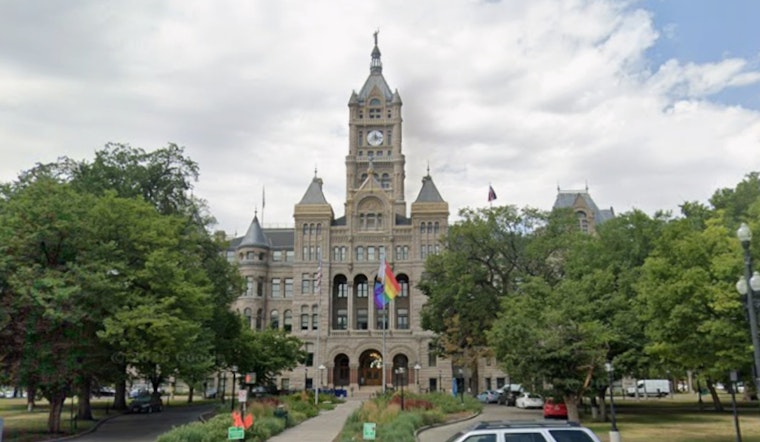
Salt Lake City's Community Reinvestment Agency has signed off on roughly $6.46 million to help income-qualifying renters in the Glendale neighborhood make the jump into homeownership. The money will seed down-payment assistance, shared-equity tools, and community-land-trust options that are intended to keep homes affordable over time. City officials are pitching the allocations as a pilot program to test whether these models can recycle capital and preserve affordability across future home sales.
As reported by Building Salt Lake, the Salt Lake City Council, which is acting as the CRA board, voted Tuesday to direct about $6.46 million to two Glendale developments. Browne Sebright, a CRA project manager, told the outlet the pilot aims to "bridge the wealth gap between renters and homeowners" by backing projects that might not meet conventional underwriting.
Two Glendale projects get the awards
Brix on Tenth is slated to deliver 46 for-sale townhomes at 1549 S. 1000 West, designed as energy-efficient, all-electric units developed by Garbett Homes, according to the city's planning packet. The developer will reserve roughly half the homes for households earning 80–100% of the area median income, while CRA support is intended to set up down-payment pools and 0% "silent" second mortgages to help preserve affordability.
The other award goes to Gladhouse 3, a CDCU project that will add eight single-family homes held by a community land trust for buyers at or below 80% AMI. Together, the two projects account for the full $6.46 million allocation, with Brix on Tenth receiving just under $4 million and Gladhouse 3 getting about $2.46 million, as reported by Building Salt Lake.
Where the money comes from
The investments draw from three CRA accounts: roughly $3,948,919 from the Westside Community Initiative, which is reserved for projects west of I-15, $1,517,484 from the School District Family Housing fund, which targets family units with three or more bedrooms, and $1,000,000 from the Housing Development Loan Fund. That adds up to $6,466,403, according to figures in the CRA's FY2025-26 NOFA. The NOFA also outlines how conditional commitments and contract negotiations must be completed before money actually flows to the projects.
Why the pilot matters
The Residential Wealth Building Pilot prioritizes homeownership and shared-equity approaches that let residents build equity while keeping prices below market, according to the CRA's program overview. Early local experiments, such as the Perpetual Housing Fund's Arbor 515 conversion, have redirected profits back to residents and helped demonstrate alternative ways renters can accumulate value, a model that has drawn attention in industry coverage. Supporters say seeding these kinds of models could help close the wealth gap between renters and homeowners in Salt Lake City.
What happens next
According to the NOFA, awarded funds will be distributed under conditional commitments, and the CRA will negotiate contractual terms with each developer before any disbursement. The pilot is structured to run 12–24 months or until funds are exhausted, so the agency can gauge which tools best preserve affordability and recycle capital. City staff plans to provide project updates as contracts are finalized and construction advances.
Officials say the CRA will track whether the dollars put into these deals can be repaid or recycled through tools such as silent second mortgages or resale-sharing, which would allow the program to fund future rounds of wealth-building units. For more on program goals and eligibility, see the CRA's Residential Wealth Building Pilot overview.





